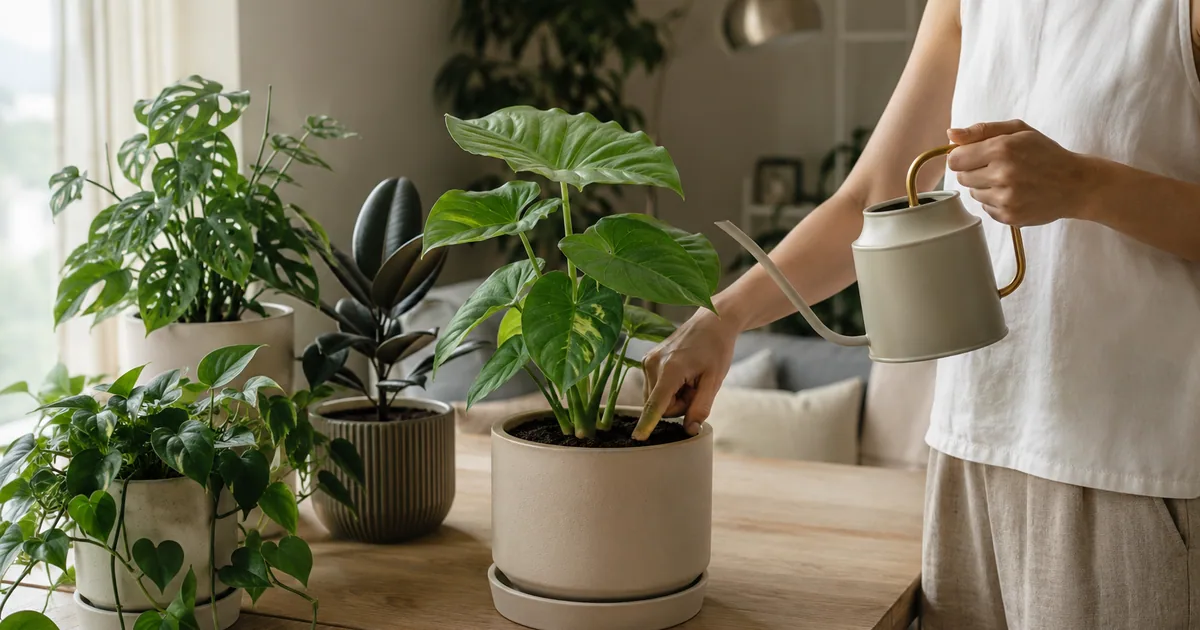
Quick answer: Check houseplants more often during a heatwave, but water only when the root zone shows that it is ready. Test below the surface, lift the pot when practical, and water thoroughly until excess drains. Move hot pots away from intense glass before adding more water to mix that is already moist.
A heatwave changes how quickly plants and potting mix lose water. It does not make one schedule correct for every pot. A fern in a small porous container and a snake plant in a large glazed pot can sit in the same room and need completely different decisions.
If a plant is drooping and you cannot tell whether the cause is heat, dry mix, or damaged roots, use Plant Doctor’s browser diagnosis after taking a whole plant photo and a close view of the soil.
Why fixed schedules fail in hot weather
Temperature is only one part of water use. Light, humidity, airflow, plant size, pot material, root health, and mix structure all matter. The University of Georgia’s indoor plant guidance emphasizes matching care to the plant and its environment rather than treating all indoor plants alike.
During hot weather:
- Bright light can increase water use.
- Air conditioning may lower humidity.
- Closed rooms can trap heat.
- Terracotta and small pots may dry quickly.
- Large decorative pots may remain wet below a dry surface.
- Root damaged plants may wilt despite wet mix.
The correct response is a shorter checking interval, not automatic daily watering.
The root zone check
Use at least two signals before watering.
Check below the surface
Push a finger, clean skewer, or moisture probe into the depth appropriate for the pot. A dry top centimetre does not prove that the full root zone is dry.
Lift the pot
When safe, compare its weight with the weight immediately after a thorough watering. Weight becomes a useful repeatable clue once you learn the pot.
Read the plant in context
Drooping plus a light pot and dry mix supports watering. Drooping plus heavy, wet mix requires caution and a root check.
Check the drainage path
Make sure drainage holes are open and the inner pot is not standing in water inside a cachepot.
A practical heatwave routine
Morning
- Check the hottest rooms and smallest pots first.
- Test root zone moisture.
- Water plants that are genuinely ready.
- Empty saucers after drainage.
- Close a sheer blind before intense window exposure.
Afternoon
Look for plants close to hot glass or in stagnant rooms. Temporary midday drooping can occur even when mix is moist. Move the pot to a cooler bright position and reassess later instead of immediately adding water.
Evening
Check plants that were borderline in the morning. Watering in the evening is acceptable when a plant needs water and drainage is good. Avoid leaving foliage wet in a cool, unventilated room.
How to water thoroughly
- Take the inner pot to a sink, tub, or draining surface.
- Apply room temperature water evenly across the mix.
- Pause if water runs down a dry gap at the pot edge.
- Continue until water exits the drainage holes.
- Let the pot drain fully.
- Return it only after the outer container is dry.
When mix has become water repellent, a slow second pass can wet it more evenly. Do not leave the pot submerged indefinitely.
What not to do
- Do not water every plant daily because the forecast is hot.
- Do not add small sips that wet only the surface.
- Do not fertilize a wilted, heat stressed plant.
- Do not place a freshly watered plant back against scorching glass.
- Do not assume misting replaces root watering.
- Do not repot during peak heat unless roots are in immediate danger.
If the pot remains wet for a long time or smells sour, review self watering pots and root rot and inspect the roots before the next watering.
Cooling plants without drowning them
- Pull pots back from hot glazing while keeping useful light.
- Use a sheer curtain instead of moving directly into darkness.
- Increase safe room ventilation.
- Shade dark outer pots that become hot in sun.
- Keep plants away from direct fan or air conditioner blasts.
- Group compatible plants loosely, with space for airflow.
The Colorado State University temperature and humidity guidance explains why indoor temperature and humidity need to be considered together.
Special cases
Succulents and cacti
Hot weather does not automatically mean frequent watering. Check whether the plant is actively growing, whether the mix is dry through the root zone, and whether nights remain very warm.
Ferns and thin leaved tropicals
These can lose water faster, particularly in small pots. Check more often and avoid allowing repeated severe wilt.
Newly rooted cuttings
Small root systems have less buffer. Keep conditions stable, use bright indirect light, and avoid both complete drying and saturated stagnant mix.
Plants in air conditioning
The room may be cooler but drier. Check leaf edges and root moisture separately. A humidifier can change air moisture but cannot rescue waterlogged roots.
After the heatwave
Return to normal checking gradually. Do not keep an emergency watering frequency once temperatures fall. Review each plant for:
- Stable new growth.
- New scorch or brown margins.
- Compacted or shrunken mix.
- Blocked drainage.
- Pests that benefited from warm, dry conditions.
If leaves show pale patches rather than general drooping, compare the pattern with heat stress versus sunburn.
References
- University of Georgia Cooperative Extension. Growing Indoor Plants with Success.
- Colorado State University Extension. Houseplants: Temperature and Humidity.
- University of Illinois Extension. Drowning and Edema.