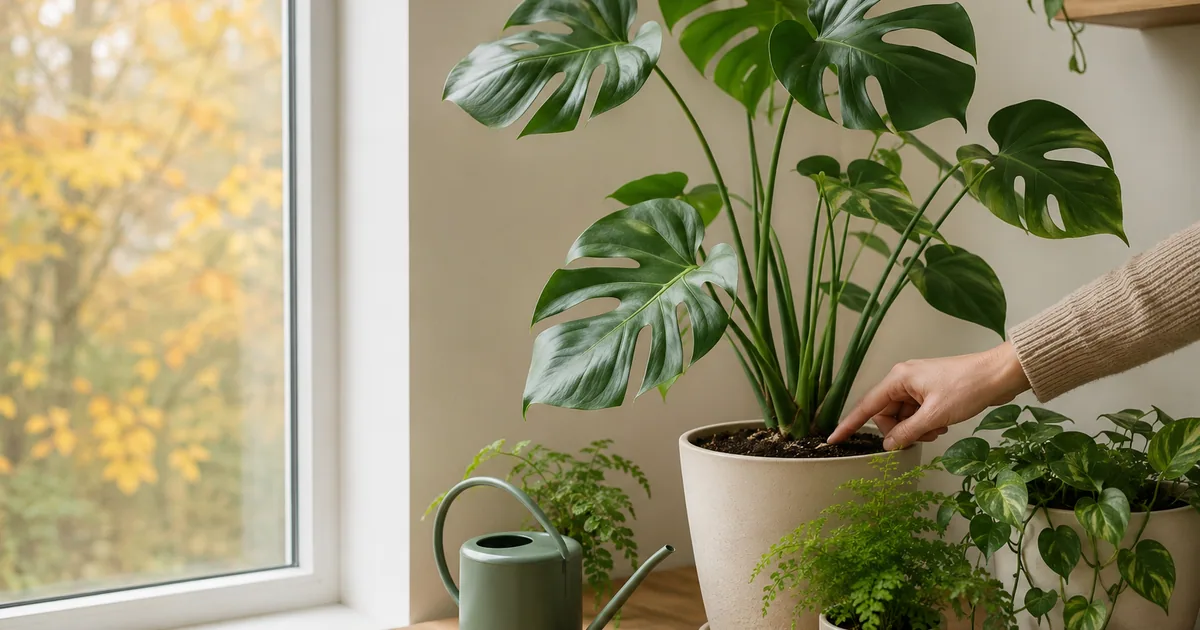
Quick answer: Cut back autumn watering only when the plant and pot show that water use has slowed. Check deeper moisture, pot weight, light, temperature, and active growth. Keep watering thoroughly when needed, but expect many indoor pots to take longer to become ready as days shorten.
“Water less in autumn” is useful only when it means “check before repeating the summer routine.” It should not mean giving every plant a small sip or forcing drought on a plant that is still actively growing.
When symptoms conflict, photograph the whole plant and root zone, then use Plant Doctor’s browser diagnosis as one source of decision support.
Why water use changes
Many houseplants use water more slowly when:
- Day length and usable light decrease.
- Indoor temperatures fall.
- Growth slows.
- Evaporation from the potting mix decreases.
- Plants move away from outdoor wind or summer heat.
Heating can complicate the pattern by making indoor air drier while the root zone still dries slowly. Air humidity and soil moisture are separate measurements.
Five signs it is time to change the routine
1. The pot stays heavy for longer
Compare the pot with its familiar post watering weight. A consistently slower weight change suggests slower drying.
2. The root zone remains moist
Check below the surface. A dry top layer can sit over moist mix, especially in large plastic or glazed pots.
3. New growth slows
Smaller or less frequent leaves can reflect seasonal light, although pests and root trouble can also affect growth.
4. The plant has moved indoors
Outdoor wind and light can make a pot dry faster. Retire the outdoor schedule after the move.
5. Yellowing appears while the mix is wet
Persistent moisture, low light, or root stress deserve investigation. Do not solve yellow leaves with more water.
What “cut back” should look like
Keep the quality of watering and change the interval.
- Wait until the plant’s root zone reaches its appropriate moisture threshold.
- Water the full root ball evenly.
- Let excess leave the drainage holes.
- Empty the saucer or cover pot.
- Record the date and compare the new interval.
Small surface sips can leave dry pockets, encourage shallow roots, and make the true moisture level harder to judge.
Build a new autumn baseline
For two or three watering cycles, record:
- Date checked.
- Root zone condition.
- Pot weight.
- Whether the plant was watered.
- Days since the previous watering.
- Room temperature and major light change.
- New symptoms.
The goal is not permanent scheduling. It is learning how the new environment changes that pot.
Plant groups need different thresholds
Succulents and snake plants
These usually need a pronounced dry period, especially when light and growth slow. The snake plant watering tests compare mushy, curled, and brown symptoms.
Thin leaved tropicals
Some should not become completely dry. Check more often, but do not assume that dry air means wet roots need water.
Ferns
Many ferns prefer more even moisture. The correct autumn adjustment may be modest if the room remains warm and bright.
Large pots
Deep mix may stay moist long after the surface changes color. Use a skewer or probe appropriate to the pot depth.
Light before water
A plant in insufficient light uses water slowly and may develop weak growth. Improve appropriate light before trying to correct every symptom through watering.
- Clean windows and leaves.
- Place the plant according to species needs.
- Keep foliage from cold glass.
- Consider a suitable grow light.
- Avoid a sudden move into intense direct sun.
For winter placement, see grow lights versus window light.
Fertilizer in autumn
Fertilizer is not a substitute for light. Reduce or pause feeding when active growth slows, according to the plant and product label. Excess soluble salts can injure roots and leaf margins.
The University of Maryland Extension describes symptom and management considerations for high soluble salts in indoor plants.
Warning signs that are not seasonal adjustment
Investigate further when:
- Mix smells sour.
- Stems or roots are soft.
- Lesions spread.
- Webbing or insects appear.
- Leaves fall rapidly.
- The plant remains limp while moist.
The University of California IPM houseplant problems resource provides a broader comparison of environmental and pest symptoms.
References
- University of Georgia Cooperative Extension. Growing Indoor Plants with Success.
- University of Maryland Extension. Fertilizer Toxicity or High Soluble Salts in Indoor Plants.
- University of California Statewide IPM Program. Houseplant Problems.