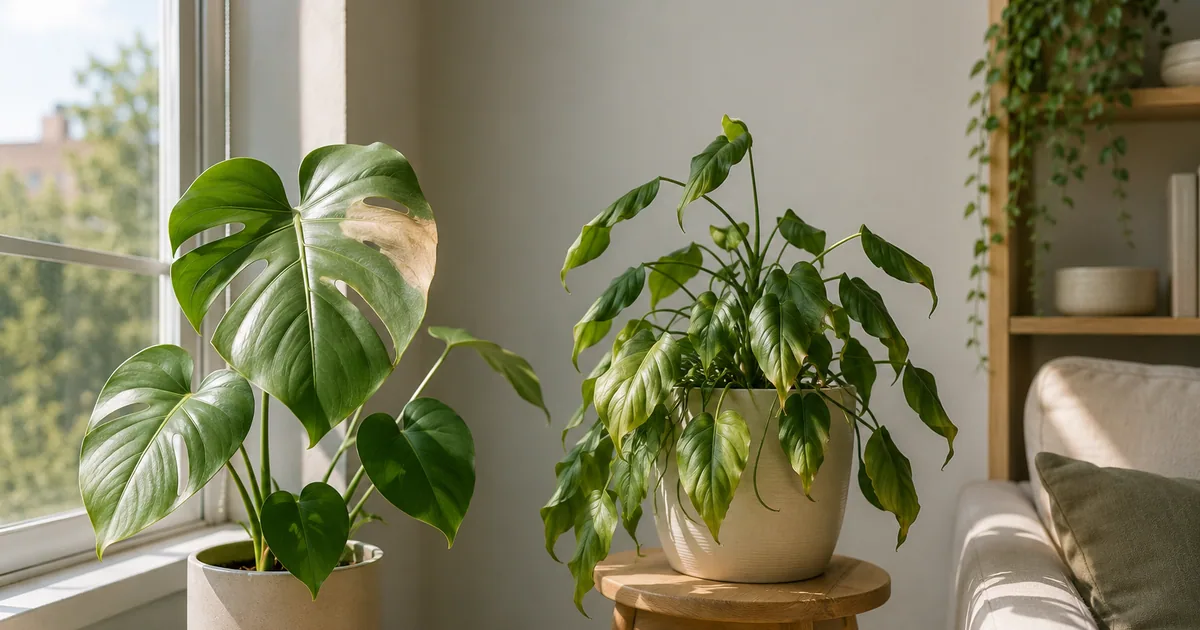
Quick answer: Sunburn usually creates pale, bleached, tan, or crisp patches on the side of a leaf facing strong light. Heat stress is more likely to affect the whole plant through drooping, curled edges, faster drying, or widespread browning. Both can happen together, so check when the damage appeared, which leaves face the window, and whether the potting mix is unusually dry or hot.
Summer damage can look dramatic, but the safest first move is observation, not treatment. A scorched patch cannot turn green again. Your goal is to stop new damage while keeping healthy roots supplied with air and water.
If the pattern is unclear, photograph the whole plant, both sides of an affected leaf, and the soil surface. You can use Plant Doctor’s browser diagnosis as a second opinion after completing the checks below.
Heat stress and sunburn at a glance
| Clue | Heat stress is more likely | Sunburn is more likely |
|---|---|---|
| Pattern | Several leaves or the whole plant droop | Damage is concentrated on exposed leaf surfaces |
| Color | Brown edges, yellowing, or general dullness | Bleached, ivory, tan, or sharply crisp patches |
| Timing | Appears during a hot room, heatwave, or rapid soil drying | Appears after a move into stronger direct light |
| Soil | Often dries faster than usual | May be normally moist |
| Leaf temperature | Many leaves feel warm | Window facing leaves receive the strongest radiation |
| Recovery signal | Turgor may improve after the room cools and watering is corrected | Damaged tissue remains marked, but new leaves stay healthy |
These clues are directional, not a laboratory diagnosis. Root problems, fertilizer salts, cold glass, and disease can create overlapping symptoms.
What sunburn looks like on houseplants
Sunburn is light injury. It often follows a sudden change, such as moving a plant from a shaded shop, shelf, or winter window into direct summer sun. Tender leaves have not had time to acclimate.
Look for:
- Pale or bleached areas that later become tan and dry.
- Damage on the window facing side of the plant.
- Clear boundaries between protected and exposed tissue.
- Marks on older exposed leaves while shaded leaves remain normal.
- A recent change in window, curtain, balcony, grow light, or outdoor placement.
Sunburn can occur even when the room does not feel exceptionally hot. Strong radiation through glass can damage a leaf while the potting mix still feels moist.
What heat stress looks like
Heat stress describes the plant’s broader response when heat increases water loss or disrupts normal function. The Colorado State University PlantTalk guidance on temperature and humidity notes that indoor plant needs vary by species and that temperature, humidity, and air movement interact.
Look for:
- Widespread drooping during the hottest part of the day.
- Leaf edges curling upward or inward.
- Potting mix drying much faster than its normal rhythm.
- Brown edges across several leaves rather than one exposed patch.
- Stress near radiators, hot appliances, unventilated conservatories, or glass.
- A lightweight pot and dry mix below the surface.
Some plants temporarily droop in heat even when the roots are moist. Watering again without checking can turn heat stress into root stress.
The five minute diagnosis
1. Reconstruct the last three days
Ask what changed. Note a new window, open curtain, outdoor move, heatwave, closed room, missed watering, or hot car journey. Timing is often more useful than the final color.
2. Map the damage
Turn the pot without moving it from its usual position. Are the damaged leaves all facing the brightest window? That supports sunburn. Are leaves around the plant affected? Heat, watering, or roots deserve more attention.
3. Check moisture below the surface
Insert a clean finger or wooden skewer several centimetres into the mix. Do not decide from the dry top crust alone. If the root zone is moist, do not add water merely because the plant is warm.
4. Inspect stems and roots when warning signs appear
Soft stems, a sour smell, persistently wet mix, or dark mushy roots point away from simple heat stress. Use the root rot recovery guide before watering again.
5. Check for continuing spread
Mark the edge of a damaged patch with a photo rather than a pen. Compare it after 24 to 48 hours. Stable damage after conditions improve supports a past event. New spots or spreading lesions require a broader diagnosis.
Safe recovery plan
- Move the plant to bright, indirect light. Avoid moving it into deep shade.
- Cool the room gradually with ventilation, blinds, or distance from hot glass.
- Water only when the root zone is ready, then water thoroughly and let excess drain.
- Pause fertilizer while the plant is stressed.
- Leave partly green leaves attached because they can still photosynthesize.
- Remove a leaf only if it is fully dry, collapsing, or encouraging decay.
- Reintroduce stronger light in small steps after healthy growth resumes.
Avoid misting leaves in direct sun. Misting does not correct dry roots or room temperature, and persistently wet foliage can create other problems in poor airflow.
How to prevent repeat damage
- Acclimate plants to stronger light over one or two weeks.
- Use a sheer curtain during intense afternoon exposure.
- Keep foliage from touching hot glass.
- Check moisture more often during hot weather, but water by need.
- Group compatible plants only when airflow remains adequate.
- Use a thermometer near the plant rather than relying on the room thermostat.
- Photograph the plant before a seasonal move so new damage is easier to recognize.
For window placement decisions, the phone light meter guide can help you compare locations without treating a phone reading as an exact horticultural instrument.
When to seek a broader diagnosis
Use a broader assessment when:
- New lesions appear after heat and light have been corrected.
- Spots are wet, soft, ringed, or spreading.
- Pests, webbing, sticky residue, or distorted new growth are present.
- The plant remains limp while the root zone is moist.
- Several plants in different locations develop the same symptom.
Take clear photos before removing leaves. A record of progression is useful for an extension service, plant clinic, or diagnostic app.
References
- Colorado State University Extension. Houseplants: Temperature and Humidity.
- University of Georgia Cooperative Extension. Growing Indoor Plants with Success.
- Colorado State University Extension. Diagnosing Plant Disorders.