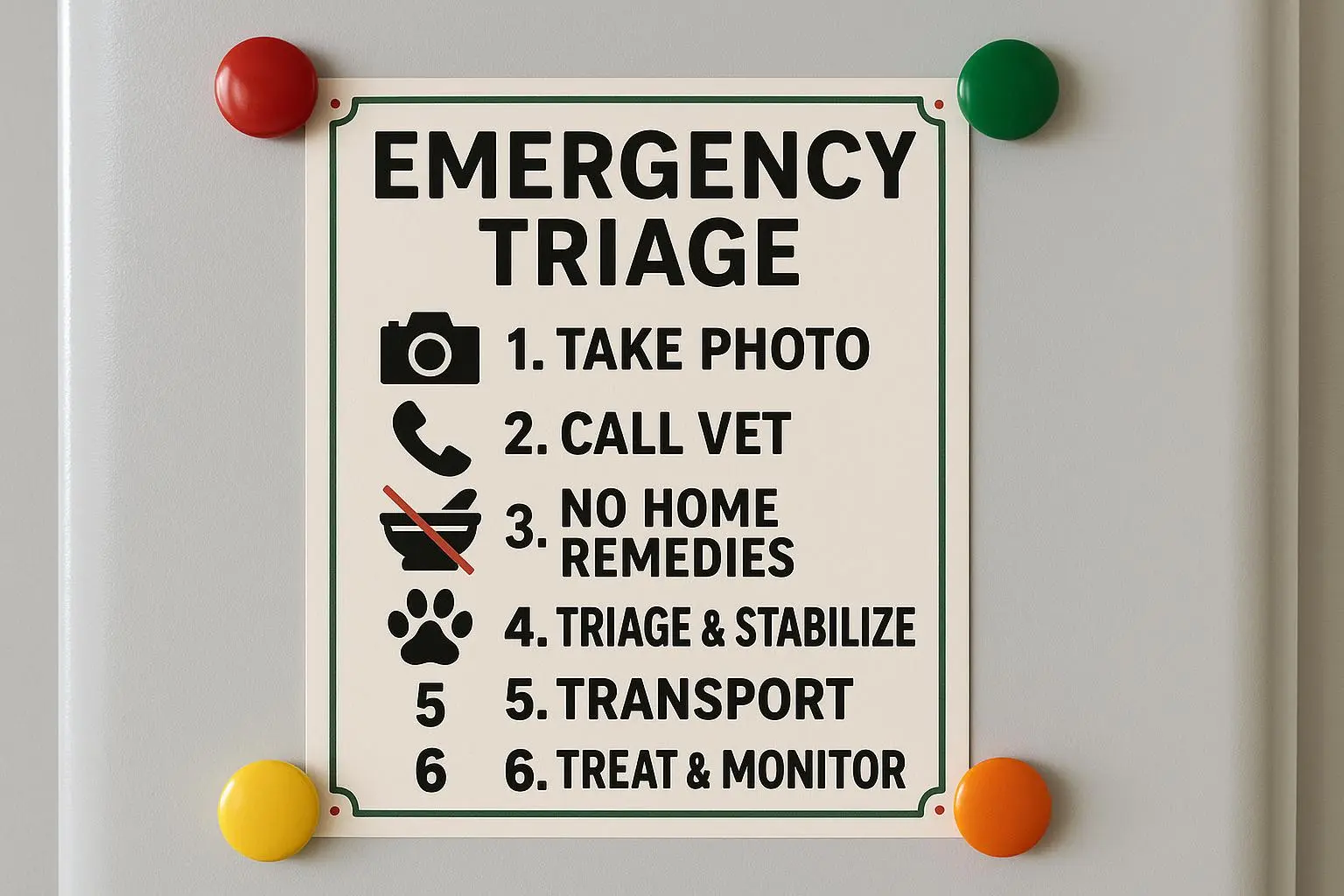
There’s a moment in every holiday where the room lights up, the tree glows, and a curious pet noses something they shouldn’t. And in that moment, you have a choice: panic, or act. I’ve been there. Once, a piece of a Christmas cactus ended up in my dog's mouth. The clock felt loud, the room narrowed to one hallway, and I realized I didn’t have a plan beyond “call the vet.” We learned fast. What helped most wasn’t fear—it was a simple, repeatable six-step checklist I could follow in the heat of the moment. This post is that checklist, distilled into a fridge-friendly triage card you can print and use this season and every season after.
And here’s the thing I learned on the way: the goal isn’t to memorize every plant you’ll ever encounter. The goal is to move from reaction to decision, quickly. To buy time for your pet’s body to respond or for professionals to guide you. A clean, calm, practical plan makes all the difference.
A quick aside before we dive in: the triage card isn’t a replacement for veterinary care. It’s a fast, at-home framework to reduce delay and confusion. If you’re ever unsure, call a vet or poison control right away. If your pet shows severe symptoms—trouble breathing, seizures, collapse—get to emergency care immediately.
Now the six steps, with real-world flavor and clear actions you can take tonight.
Step 1 — Identify the culprit and secure the scene
Your first job is to figure out what your pet swallowed, how much, and roughly when. Plants differ wildly in their toxicity. A few common culprits show up around holidays:
- Poinsettias and holly (mild to moderate GI upset in many cases)
- Mistletoe (more toxic, especially berries and leaves)
- Lilies (for cats, potentially deadly—cats are at real risk)
- Amaryllis and narcissus bulbs (vomiting, tremors, lethargy)
- Christmas cactus (usually milder)
- Water from a Christmas tree that’s often full of preservatives or bacteria
How you act here matters. If you have a plant tag or a photo from the plant itself, grab it. If you don’t, grab the plant in your pet’s mouth or the pot. Then step away from the scene to prevent more access and take clear photos from multiple angles: close-ups of leaves, stems, berries, blossoms, and any drool or regurgitation. This isn’t about being dramatic; it’s about giving the vet or poison-control expert a fast, precise picture.
A quick micro-moment that stuck with me: I kept the plant photo on my phone with a bright sticker that said “TOXIN?” The sticker helped me snap the right photo in under 10 seconds, even as my dog nudged a toy and whined for attention. It sounds silly, but the tiny detail made the difference between guessing and knowing.
What I learned: even plants that look harmless can be dangerous in small amounts, and some symptoms don’t appear immediately. Identifying the plant helps you gauge risk, choose your next actions, and communicate quickly with professionals.
Step 2 — Assess immediate symptoms (and time)
Now you watch. What’s happening in the minutes after ingestion? The symptom list runs long, but you’ll see two buckets:
- Mild or no symptoms for the moment: slight drooling, a little gagging, or a small amount of vomiting that stops.
- Red flag symptoms: repeated vomiting, heavy drooling, tremors, weakness, rapid breathing or coughing, blue-tinged gums, seizures, or collapse.
Different plants carry different risks, and the timing matters. Some toxins cause early stomach upset; others trigger delayed kidney or cardiovascular problems. Note the exact symptoms and when they started. If you’re ever unsure, treat it as urgent and seek professional guidance.
A story from the field to illustrate timing: a friend once reported her dog seemed fine for several hours after nibbling holly berries. Then the dog suddenly started vomiting in a way that wouldn’t stop. It wasn’t the “easy” outcome she hoped for, and it underscored the need to monitor closely—even when there are no initial red flags.
What you’re gathering here isn’t bravado; it’s data you’ll relay to pro help lines or your vet.
Step 3 — Gather essential information (the fast checklist)
Clear, concise information lets a vet or poison-control expert triage the risk quickly. Have these ready or easily accessible:
- The plant’s name or a good photo
- Estimated amount ingested
- Time of ingestion (even rough)
- Your pet’s species, breed, age, weight
- Any pre-existing medical conditions or medications
- Current symptoms and when they started
- Any first-aid steps you’ve already applied
If you’ve already made calls to a veterinarian or poison-control line, have the case number handy. If you don’t have a line on speed-dial yet, keep a note with “ASPCA Poison Control” and “Pet Poison Helpline” listed with their numbers.
What I did in a deterrent moment: I saved the poison-control numbers in my phone with a quick label—“Pet Poison Help.” It sounds small, but the moment you need it most, you don’t want to be rummaging for the digits.
Step 4 — Contact your vet or a pet poison control line IMMEDIATELY
This is the crucial pivot. Do not wait for symptoms to worsen. You can use more than one resource depending on time and access:
- Your regular veterinary clinic (call and report what you know)
- An emergency veterinary clinic (if after hours or immediate danger)
- Pet Poison Helpline or ASPCA Animal Poison Control Center (APCC) for expert toxicology guidance
Yes, there’s typically a fee for some of these services, but in an emergency, that fee buys calm, precise instructions that can save days of worry and potential treatment delays.
Real-world reminder: a lot of people underestimate how fast a call can avert a crisis. One pet owner I spoke with found the Pet Poison Helpline invaluable when her cat ate a piece of Christmas cactus. The operator walked her through the next steps in real time. The pet owner called back with questions, and the guidance kept her from panicking—helping her make the best possible choices for treatment.
If you’re worried about costs, ask about telehealth options or what the clinic will advise you to do at home before you rush to the ER. Still, if you hear something like “this plant is highly toxic” or you observed significant symptoms, don’t hesitate—get to care.
Step 5 — Follow professional advice and monitor
After you’ve spoken to a professional, do what they tell you. The path may be one of several:
- Watchful waiting at home (mild symptoms or small ingestion, with explicit watchful-waiting instructions)
- Inducing vomiting only if specifically directed (and only under veterinary or poison-control supervision)
- Urgent veterinary care (severe symptoms, high-toxicity plants like certain true lilies for cats, or large ingestions)
If you’re staying home, keep a close watch on your pet’s behavior. Pets can deteriorate quickly, even after a period of seeming okay. If anything changes, revisit Step 4 and loop back into professional care.
And here’s a human moment you’ll recognize: I once thought “they’ll be fine” when my dog showed only minor drooling after nibbling a small amaryllis piece. A few hours later, the dog started vomiting in waves and clearly didn’t feel well. I rang the vet, and we adjusted our plan immediately. The difference between a delayed response and a swift adjustment was night and day.
Step 6 — Safe at-home first aid: do’s and don’ts
While you’re waiting for or en route to care, follow these practical guidelines. They’re not a substitute for veterinary instructions, but they help keep your pet calm and your actions focused.
Do
- Offer small amounts of water if your pet is conscious and able to swallow, unless the vet says otherwise
- Keep your pet warm and comfortable
- Stay calm; your energy matters to your pet
- Bring a plant sample or clear photos to the vet
- Note time since ingestion and any symptom changes in real time
Don’t
- Induce vomiting unless you’ve been told to do so by a professional
- Give human medications or home remedies without veterinary guidance
- Delay seeking professional help, even if symptoms seem mild at first
A cautionary anecdote: someone I know tried to “make it all better” by giving hydrogen peroxide to her dog after a holly ingestion. It backfired—the dog aspirated some of the liquid and worsened. She learned the hard way that home remedies aren’t magic; they’re risky if you don’t know what you’re doing. Always opt for professional guidance first.
Common holiday plant notes you should know
- Poinsettias: Often overstated as deadly; more commonly cause mild GI upset. Still, it’s not worth testing your pet’s tolerance.
- Holly: Can cause vomiting, diarrhea, and drooling due to irritants.
- Mistletoe: More dangerous, especially berries—watch for GI upset and cardiovascular symptoms.
- Lilies (true lilies for cats): Extremely toxic and can cause kidney failure in cats; dogs are less susceptible but still should be treated seriously.
- Amaryllis: Toxic alkaloids; can cause vomiting, tremors, lethargy.
- Christmas cactus: Generally mild; not considered highly toxic, but ingestion can cause GI upset.
It’s not a complete atlas, but it gives you a practical sense of risk. The key takeaway: don’t assume “not bad” means “zero risk.” When in doubt, treat it seriously and get guidance.
Downloadable 1-page triage card
To help you stay prepared, we’ve included a printable 1-page “Pet Holiday Plant Poisoning Triage Card” you can print and tape to the fridge. It includes the six steps, space to note plant type, symptoms, and emergency contacts. The goal isn’t to clutter your brain with more rules—it's to give you a fast, familiar script when every second counts.
The value of preparation isn’t theoretical. Preparation reduces your reaction time, lowers your stress, and increases the odds you’ll act in a way that helps your pet, not in a way that leaves you guessing what to do next.
Closing thoughts: stay curious, stay prepared
The holidays are about joy, not fear. If you keep a few simple practices in place, you can navigate plant hazards with confidence:
- Keep a small “emergency plant kit” near the tree: a few gloves, a bottle of water, clean towels, your triage card, and digital photos of common plants.
- Tell family and guests about the plan. A quick chat at the start of the party can prevent a frantic search later.
- Consider pet-safe decor options or out-of-reach placements for anything you’re unsure about. Little changes now can save big worry later.
If you want more support, the online ecosystem has robust resources. The ASPCA Poison Control Center, Pet Poison Helpline, and veterinary toxicology references are all valuable. And if you’d like, keep our printable triage card on your fridge as a reminder and a quick reference when things feel urgent.
References and further reading
ASPCA Animal Poison Control Center (APCC) — Toxic plant list and guidance for pet owners. 24/7 advice for plant-related exposures. Retrieved from https://www.aspca.org/pet-care/animal-poison-control/toxic-and-non-toxic-plants
Gwaltney-Brant, S. M. et al. (2012). Toxicology of Common Houseplants, Veterinary Clinics of North America: Small Animal Practice. Retrieved from https://www.sciencedirect.com/science/article/abs/pii/S019556161100140X
Additional practical guidance: extension resources on holiday plants and pets, and reputable pet safety channels.