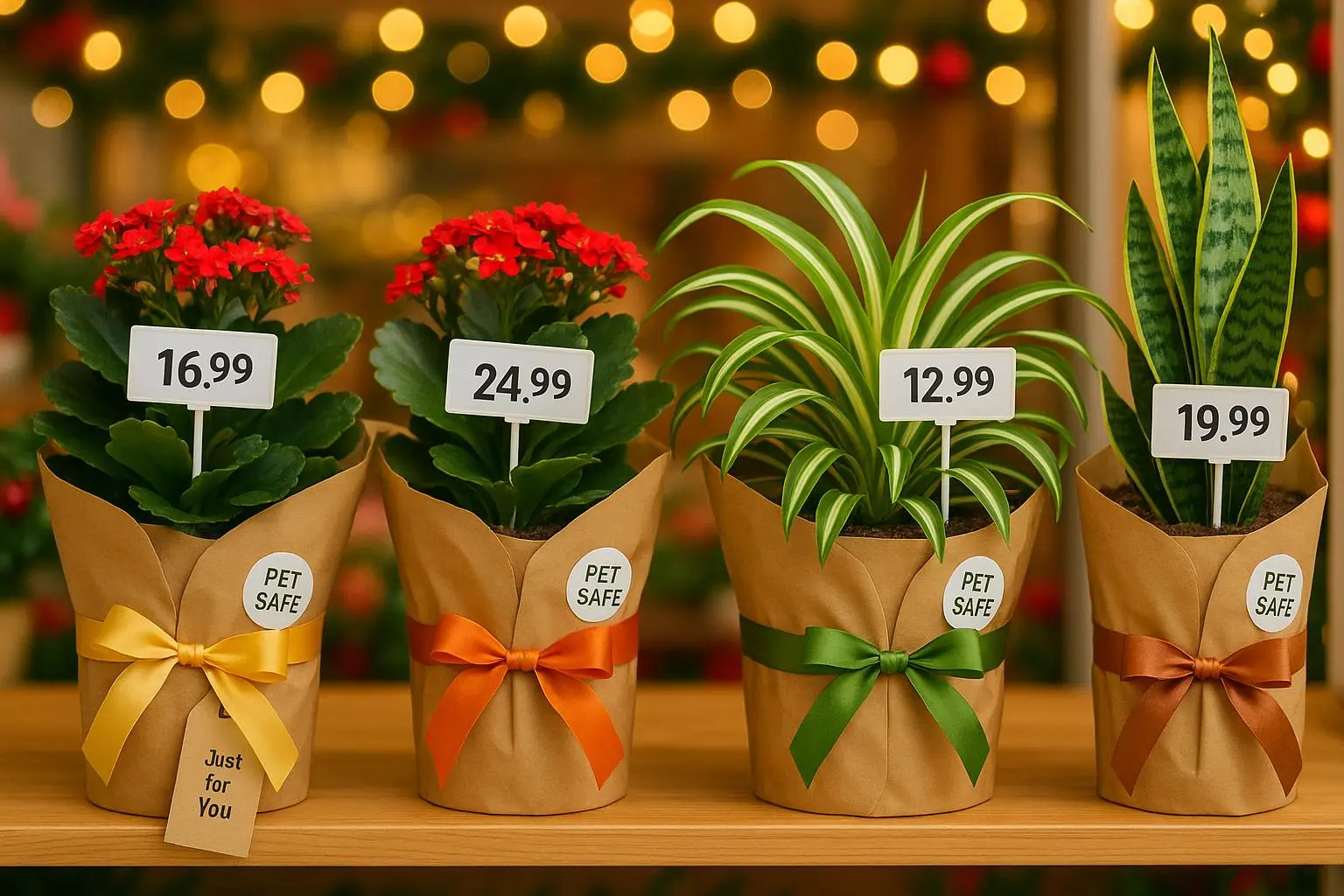
If you’re buying a holiday plant for someone with pets, you’re juggling two goals at once: make it beautiful and make it safe. I’ve done this twice in the last year, and I learned a few hard-won lessons about price, practicality, and presentation. The result? Gifts that feel thoughtful, not risky. And a few stories that still make me smile.
I’ll be honest: I started out thinking “pet-safe equals boring.” Then I watched a friend’s curious cat scale a Christmas cactus like it was a climbing obstacle course, only to realize the plant was perfectly safe. The cat, meanwhile, developed a new appreciation for indirect light and slightly drier soil. It wasn’t dramatic, but it was a little revelation: safe doesn’t mean bland. It means you can gift something that brings joy without turning a holiday into a veterinary bill.
A quick aside that stuck with me: I once wrapped a pet-safe plant in a burlap wrap, tied it with twine, and added a tiny ceramic bird as a gift tag. The recipient’s toddler thought the bird was a new family member and named it “Sunny.” The plant stayed put on a high shelf, Sunny became a party trick for the grandparents, and no one had to worry about sharp ribbons or choking hazards. It’s the little details—the wrap, the height, the story—that transform a plant from decoration into a memory.
If you’re shopping this season, here’s a practical map for gifting pet-safe plants that won’t break the bank. I’ll cover five top choices, how to tailor selections to the recipient’s living situation, the best ways to wrap and place the plants so pets stay safe, and where to buy without sacrificing quality. I’ll also include a printable price comparison grid and copy you can print for gift tags. Yes, you can be generous and smart at the same time.
Before we dive in, a quick, real-world check I’ve learned to rely on: always verify a plant’s safety status. The ASPCA maintains a thorough list of toxic and non-toxic plants for cats and dogs. It’s not just trivia—it’s the first layer of protection you owe the gift recipient and their pets[^aspca].
The pet-safe gifting mindset
The big question isn’t “What’s pretty?” It’s “What can this household actually keep thriving without constant worry?” The answer is a mix of 1) price point, 2) care level, 3) safety, and 4) presentation.
- Price: Holiday season steals and bundles mean you can get quality pet-safe plants for around $10–$25, depending on size and variety. It’s not rare to find a Christmas cactus or a compact Parlor Palm at the lower end of that range if you shop around.
- Care level: If you’re gifting to a first-time plant owner, pick plants that tolerate occasional neglect. If you know the recipient loves a challenge, you can push toward slightly more demanding options, but with explicit care notes.
- Safety: No surprises. Double-check that the plant is non-toxic to cats and dogs. Even when a plant is “low risk,” it’s nice to have a simple care checklist so the recipient isn’t left guessing.
- Presentation: The wrapping, pot choice, and placement all matter. Pets hate dangling ribbons (they become chew targets) and early excitement can lead to a toppled plant. A heavier pot, a decorative pot cover, and a clear note about placement make a huge difference.
Now let’s talk specifics—five top performers you can actually gift without breaking the bank.
Top pet-safe holiday plants that won’t bust your budget
Top picks are non-toxic to cats and dogs, widely available, and generally under $25 in many markets during the holiday rush.
- Christmas Cactus (Schlumbergera)
- Why it works: Bright, festive blooms that last for weeks. Easy care, forgiving of occasional misses in watering.
- Who it’s for: New plant parents, apartment renters.
- Typical price range: $10–$25.
- Gift appeal: Classic holiday color, reliable flowering, and a history of being forgiving.
- African Violet (Saintpaulia)
- Why it works: Compact size; blooms are cheerful; doesn’t demand dramatic light.
- Who it’s for: New plant parents, renters with limited space.
- Typical price range: $5–$15.
- Gift appeal: Windowsill-friendly, immediate color payoff, easy to tuck into a small gift basket.
- Parlor Palm (Chamaedorea elegans)
- Why it works: Big presence, but not a monster pot. Handles lower light and is non-toxic.
- Who it’s for: New plant parents who want a “grown-up” look without the fuss.
- Typical price range: $15–$25.
- Gift appeal: A touch of leafy luxury that still fits in tight apartments.
- Prayer Plant (Maranta leuconeura)
- Why it works: Unique foliage that folds at night—eyes will light up at the “praying” leaf movement.
- Who it’s for: Folage lovers who want a conversation piece; renters with mid-level light.
- Typical price range: $12–$20.
- Gift appeal: Striking pattern; easy to maintain with steady humidity.
- Hoya (Wax Plant)
- Why it works: The leaves are sculptural, the vines are forgiving, and the flowers smell gently sweet when they bloom.
- Who it’s for: Forgetful waterers and new plant parents who want a little drama without a lot of effort.
- Typical price range: $15–$30.
- Gift appeal: A compact, charming plant that looks expensive but won’t cost a fortune.
If you want a broader list, you’ll see some strong options like Norfolk Pine (Araucaria heterophylla) for small-space shelves, or Calathea for dramatic leaf patterns. The trick is to pick things that are non-toxic and acclimate well to typical home environments. If you’re curious about how these plants behave around pets, keep an eye out for robust care guides and community experiences—they’re surprisingly helpful when you’re choosing a gift for a pet-friendly home[^aspca].
Micro-moment: a detail I keep returning to
I recently bought a small 6-inch Christmas Cactus for a friend who rents a studio. It fit perfectly on a high shelf next to a lamp. The wrapping was simple burlap with a twine bow, and I tucked a tiny note under the pot: “Place this where your cat can’t reach, but you can see it every day.” The recipient texted a photo of the plant in its new spot, the bloom already starting to open, and a small smiley emoji that felt oddly ceremonial. It’s the little, tangible things—the height, the wrapping, the note—that make it feel thoughtful rather than generic.
And a quick reality check: not every plant will click with every household. If the recipient has a dog that loves to chew, you’ll want to choose something that’s not a hazard and place it out of reach even when the dog is excited. That’s where careful wrapping and a high, sturdy pot come in. Treat it like you’re designing a small, pet-safe sculpture for someone’s living room.
Care-level icons as a helpful nudge
Easy: You can get away with light watering and a spot with moderate light.
Moderate: A bit more attention to humidity and consistent watering.
Advanced: Specific light, temperature, and soil needs—great for experienced plant people.
Easy: Christmas Cactus, Parlor Palm
Moderate: Prayer Plant, Hoya
Advanced: Calathea and some Norfolk Pine variations
Audience-tagged picks: tailor-made gifts
- New Plant Parents: Christmas Cactus, Prayer Plant, Hoya
- Apartment Renters: Norfolk Pine, Bird’s Nest Fern, Christmas Cactus
- Experienced Growers: Mini Rosemary Topiary, Calathea, Achira (Canna Lily)
The point isn’t to box people in. It’s to make gifting choices that feel deliberate and easy, whether you’re shopping for a first plant or a seasoned green thumb.
Best gift-wrapping approaches to keep pets safe
Wrapping isn’t just about looking nice. It sets the safety baseline for the first days after unwrapping.
- Opt for decorative burlap or fabric wraps. They’re sturdy, reusable, and less tempting for chewers than shiny plastics.
- Choose a heavier pot or a sturdy pot cover to discourage quick nudges or topple attempts.
- Avoid edible decorations near the plant. Ribbons, candy canes, and shiny foil can light up a curious pet’s appetite.
- Include a simple deterrent note: a gentle reminder to place the plant on a high shelf and away from the dog’s or cat’s reach.
- Attach a small tag with a practical care tip: “Water when the top inch of soil is dry; avoid overwatering.” It’s a quick, useful reminder that helps the recipient keep the plant healthy.
If you’re gifting smaller plants, consider placing them inside a decorative glass cloche or a terrarium. It creates a visually appealing display and reduces the chance of a pet-induced tumble.
Store and online sourcing tips for the season
Local nurseries and garden centers often run holiday specials on pet-safe varieties. Shopping locally not only supports small businesses but gives you a chance to inspect plant health in person before purchase.
- Local nurseries: Christmas Cactus, Norfolk Pine, and African Violets frequently go on sale in December.
- Big-box retailers and garden centers: These spots can be reliable for Hoya, Parlor Palm, and Prayer Plant, often with seasonal discounts.
- Online options: Reputable retailers like The Sill and Costa Farms are convenient and typically ship in sturdy packaging that minimizes damage during transit.
- Price comparison: A quick price check between the shop and online storefronts can save you $5–$10 per plant in the holiday rush.
- Propagation ideas: If you’re gifting to someone who loves DIY, a propagating Hoya or a small Prayer Plant cutting can be a thoughtful, budget-friendly option.
A practical tip I’ve used: buy a couple of backup planters and a spare bag of soil as a small add-on gift. It’s not flashy, but it helps the recipient set up quickly and keep the plant thriving.
Printable price-comparison grid and gift-tag copy
I’ve included a simple printable grid you can use to compare local prices and a few gift-tag copy options you can print and attach.
Printable Price-Comparison Grid concept (conceptual, adapt to your locale)
- Christmas Cactus: Local price $12, Online price $15
- African Violet: Local price $6, Online price $10
- Parlor Palm: Local price $18, Online price $25
- Prayer Plant: Local price $16, Online price $20
- Hoya: Local price $20, Online price $22
- Norfolk Pine: Local price $20, Online price $25
- Calathea: Local price $22, Online price $28
- Achira (Canna Lily): Local price $28, Online price $35
Gift tag copy (print-friendly)
- Christmas Cactus: “Pet-Safe & Festive! Place in bright, indirect light. Water when the top inch of soil is dry.”
- African Violet: “Non-Toxic Beauty! Perfect for a bright windowsill. Water from the bottom to keep leaves dry.”
- Parlor Palm: “A pet-safe statement piece for any room. Easy care, big impact.”
- Prayer Plant: “A little drama for your décor—pet-safe and leaf-movement magic.”
- Hoya: “Low-water, high-charm. A thoughtful gift that grows with them.”
- Phalaenopsis Orchid: “Elegant and safe for pets. A long-lasting gift that feels luxurious.”
- Norfolk Pine: “Festive mini-tree for small spaces. Safe and sturdy.”
- Calathea: “Leaf pattern showstopper. Humidity-friendly and pet-safe.”
- Achira (Canna Lily): “Bold blooms, tropical vibe, pet-safe and striking.”
If you want something extra polished, you can print a two-page gift set: a grid page with the plant names and prices, and a page with the three tag copy options. The core idea is: give them a credible, simple tool to wrap up the gift and stand by safe care.
A note on accuracy and safety
To keep you confident, I’m leaning on two sources you can trust:
- ASPCA’s toxic vs. non-toxic plant list for quick safety checks
- Care guides and practical tips from garden and horticulture resources
If you want to dig deeper, here are a few trusted anchors I used while crafting this guide:
- The ASPCA toxic/non-toxic database
- Orchid care guides for Phalaenopsis
- Research on pet-proofing indoor environments and safeguarding households with pets
And because I want you to feel confident in your choice, I checked real user experiences. A Reddit thread praising the Christmas Cactus for forgiving care and pet safety reinforced my decision to feature it prominently. A separate post about a Prayer Plant gifting mishap reminded me to emphasize heavy pots and placement from the start. These voices aren’t the be-all, but they helped shape a practical, human guide rather than a sterile list of options.
How to use this guide in a real shopping scenario
- Step 1: Determine the recipient’s living situation. Are they a renter? Do they have a dog that loves to sniff or nibble?
- Step 2: Pick one plant from the five top options (aim for “Easy” or “Moderate” care levels).
- Step 3: Choose a sturdy pot and wrap. Avoid overly flashy ribbons; go with something that won’t tempt pets.
- Step 4: Print the price grid and tag copy. If you’re gifting to multiple friends, you can print a few variations to mix and match.
- Step 5: Include a short note about placement. For example: “Place on a high shelf or in a corner, away from pet activity. Water when the top inch of soil is dry.”
The result is a gift that feels personal and thoughtful, not like a “safe” afterthought. It’s a plant your friend will want to nurture, not hide in the closet.
A few practical tips to close the loop
- Keep receipts. If the recipient has a change of heart about a plant’s safety or care, a quick exchange is often easier with a receipt in hand.
- Suggest a care starter kit. A tiny spritz bottle, a moisture meter, and a small bag of soil can turn a plant into a thriving holiday success story.
- Consider a digital gift note. If you’re sending remotely, include a care card image and a short note about where to place the plant and how to water it.
If you’ve made it to here, you’re already ahead of most gift-givers. You’re thinking about safety, budget, and delight. You’re thinking about the person who will unwrap the plant and the four-legged family members who may wander by.
This isn’t about scaring away gift enthusiasm. It’s about channeling that excitement into something lasting and joyful—an easy, pet-safe plant that fits a holiday budget and a busy life.
And if you’re curious about where to find information in a pinch, the ASPCA list and reputable care guides are excellent starting points. Use them not as a gatekeeper, but as a friendly compass that helps you pick plants your friends can enjoy without worry.
References
[^aspca]: ASPCA. (2024). Toxic and Non-Toxic Plants List. Retrieved from https://www.aspca.org/pet-care/animal-poison-control/toxic-and-non-toxic-plants