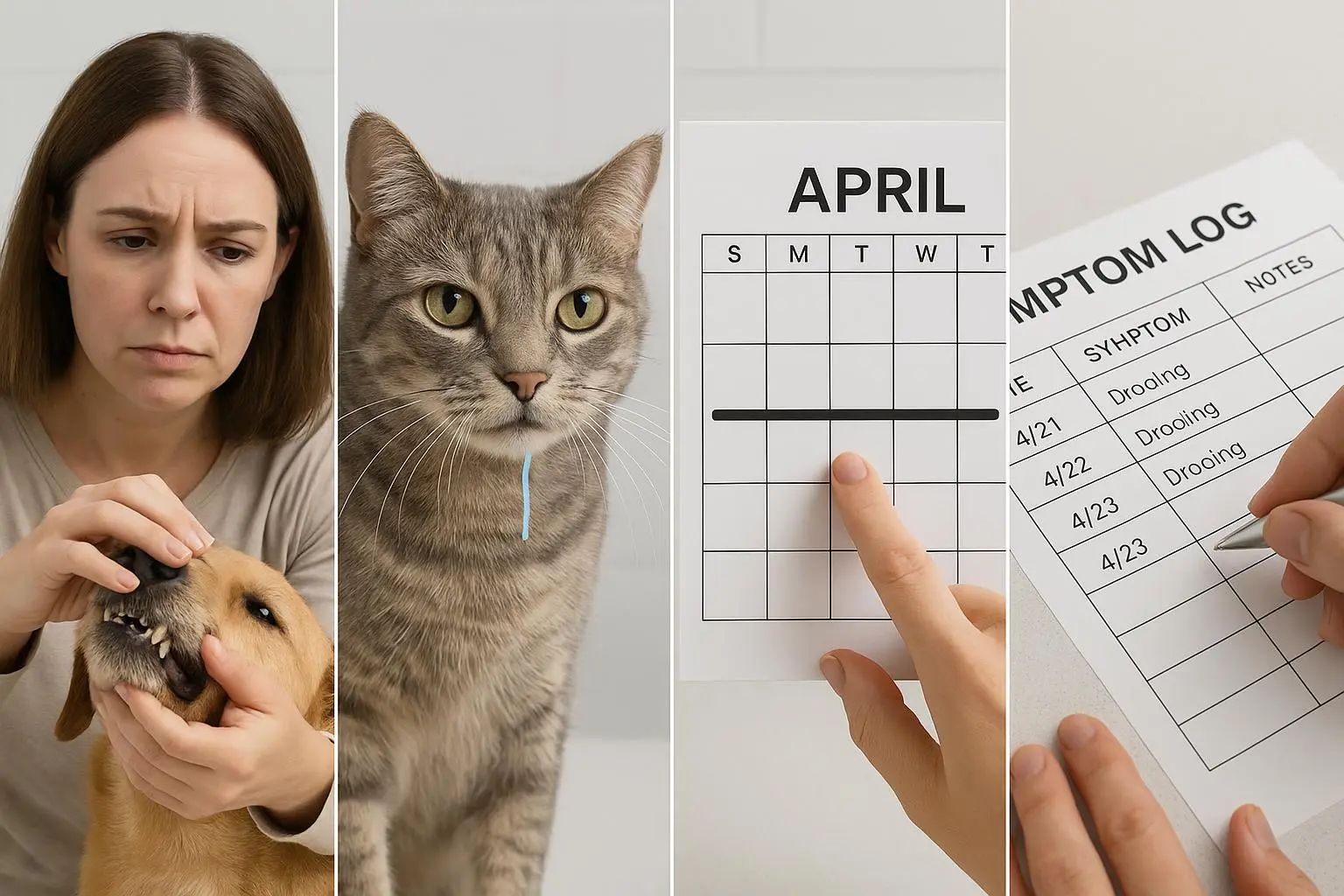
You catch your cat chewing on a plant. Or your dog walks by a freshly dug bed and swallows something green. What do you do first? Panic is normal. But the right next steps — and knowing what symptoms mean "go to the ER now" — will change outcomes.
This guide walks through the most common signs of plant poisoning in dogs and cats, how fast symptoms can show up depending on the toxin, the absolute red flags that require immediate veterinary care, holiday-specific hazards, and a simple symptom-log you can use the next time something goes wrong.
I’ll be blunt: some plant reactions are dramatic and immediate; others sneak up hours or days later. Missing that window is how pets end up critically ill.
Quick primer: why timing matters
Plant toxins don’t behave the same way. Some are irritants that cause pain and drooling within minutes. Others are absorbed, travel to the liver or kidneys, and only cause trouble 24–72 hours later.
That timing — the latency window — is the single most useful thing you can know when triaging a suspected ingestion.
- Immediate (minutes to 2 hours): oral irritation, drooling, pawing at mouth, immediate vomiting. Think insoluble calcium oxalates in pothos, dieffenbachia, calla lilies.
- Early-delayed (4–24 hours): GI upset that worsens, lethargy, shakiness. Could be saponins or moderate alkaloids.
- Delayed (24–72+ hours): organ-targeting toxins — liver, kidney, or heart signs. Sago palm (cycasin) and some lilies fall here.
If you’re wondering which plants fall where, I’ll list the common culprits later. For now: if you saw the pet eat it and it’s a known high-risk plant, treat the clock as if it’s already ticking.
The six symptom clusters and what they usually mean
I break what I see into five short clusters. Each cluster hints at a different mechanism and urgency.
- Oral and airway distress — immediate and dangerous
- Drooling, foam, thick ropey saliva.
- Pawing at the mouth, swollen lips/tongue.
- Any breathing difficulty (gasping, open-mouth breathing, blue or pale gums).
What this usually means: direct mucosal irritation (calcium oxalates) or allergic-type swelling that can compromise the airway. This is an emergency.
- Gastrointestinal signs — most common, but variable danger
- Vomiting (single vs. persistent), retching, bile, watery or bloody diarrhea.
- Loss of appetite and abdominal discomfort.
What this usually means: mild-to-moderate toxicity or the body trying to eject an irritant. Persistent vomiting leads to dehydration fast — call your vet if it’s continuous or bloody.
- Neurological signs — red flag for systemic toxins
- Tremors, full-body shaking, seizures.
- Ataxia (stumbling), confusion, collapse.
What this usually means: toxins affecting the nervous system (some alkaloids, certain mushrooms, or cardiac glycoside-related CNS effects). Treat like an emergency.
- Cardiac and circulation changes — stealthy but deadly
- Weakness, fainting, slow or irregular pulse.
- Pale or brick-red gums, collapse.
What this usually means: plants with cardiac glycosides (oleander, foxglove) or severe electrolyte imbalances. Immediate vet care required.
- Kidney or liver signs — often delayed
- Increased or decreased urination, excessive thirst.
- Yellowing of gums/skin (jaundice), dark urine, prolonged lethargy.
What this usually means: organ-targeting toxins (e.g., true lilies in cats cause acute kidney injury; sago palm damages liver and can lead to failure). The delay here is why owners think “they seemed fine” — until they weren’t.
- Behavioral/other vague signs
- Sudden extreme lethargy, hiding, or aggression after a plant interaction.
What this usually means: could be early systemic illness. If behavior changes and you know ingestion occurred, don’t wait.
Micro-moment: I still remember the odor of the vet clinic the night we brought in a dachshund — antiseptic, faintly sweet from medicated shampoos — and how that sterile smell suddenly felt hopeful. Small sensory anchors like that stick with you.
When to stop guessing and call the vet — immediate red flags
Call emergency vet now if you see any of these:
- Difficulty breathing or visible throat swelling.
- Uncontrolled seizures or repeated tremors.
- Persistent vomiting or diarrhea causing weakness or collapse.
- Any sign of liver or kidney failure (yellow gums, very weak, very thirsty or not peeing).
- Known ingestion of an extremely toxic plant: true lilies (cats), sago palm, oleander, castor bean, large quantities of azalea/rhododendron.
If you’re unsure, call your regular vet or a poison hotline. It’s worth the call.
How long until symptoms show? Real-world timelines
- Calcium oxalate plants (pothos, dieffenbachia, philodendron): seconds to minutes. Oral pain and drooling is immediate.
- Lilies (Lilium spp.) in cats: vomiting can appear within a few hours, but kidney injury often shows 24–72 hours after ingestion.
- Sago palm (cycasin): GI signs can be within hours; severe liver failure often develops 24–72 hours after ingestion.
- Azaleas/oleander: GI and cardiovascular signs can appear within hours but severity ramps depending on dose.
You can’t “wait it out” safely with delayed-toxicity plants. If ingestion of a high-risk plant is known, bring your pet in even if they appear normal.
Holiday hazards (a short, critical list)
The holidays bring big risks: cut flowers on tables, wreaths, and curious pets.
- Lilies (including Easter and Asiatic lilies): cats — absolute emergency.
- Poinsettias: mostly mild irritation but can cause vomiting and drooling in large amounts.
- Mistletoe: GI upset and potential cardiovascular effects.
- Holly berries: vomiting, diarrhea; can be problematic in larger amounts.
- Amaryllis: vomiting, abdominal pain, possible tremors.
If you’re decorating, put these out of reach or skip them. And yes — vase water can be toxic (pollen, plant compounds dissolve into it).
A short story: what I did wrong (and what I learned)
A few years ago I fostered a young tabby who loved climbing. I kept a medium-sized peace lily on a side table. One morning she knocked a leaf and shredded a bit; I watched her lick and thought, “she’ll be fine.” She hid for about 12 hours and seemed just sleepy. By the evening she wouldn’t jump onto the couch and wouldn’t eat. I called our vet; they said to come in immediately. By the time we arrived she was lethargic with elevated kidney markers. The vet said the window for early supportive care had already narrowed.
What I learned: see it? Act immediately. Even small nibbles from certain plants aren’t “cute” — they’re dangerous. Also, bring the plant or a photo to the clinic. It saved the vet time in figuring out treatment.
That cat recovered, but the scare taught me to remove all questionable plants from rooms where fosters stay and keep an emergency plant photo album on my phone for quick ID.
What to do right now if you see ingestion
- Remove the pet from the plant area and keep them calm.
- Try to identify the plant — photo or a clipped leaf helps.
- Note the time of ingestion and symptoms (use the symptom-log below).
- Don’t induce vomiting unless a vet tells you to. Some plants and circumstances make vomiting dangerous.
- Call your vet, ASPCA Poison Control (or local poison hotline), or Pet Poison Helpline for immediate guidance.
- Bring the pet (and plant/sample/photo) to the clinic if advised.
Symptom-log template (use this at the clinic)
You can copy this into your phone notes or print it.
- Pet name / species / weight:
- Date/time of suspected ingestion:
- Plant name (or description/where found):
- Symptoms observed (time stamped):
- Drooling — time:
- Vomiting — time/frequency:
- Diarrhea — time:
- Tremors/seizures — time/duration:
- Breathing difficulty — time:
- Other (behavior change, inappetence):
- Actions taken before clinic (rinsing mouth, called vet, induced vomiting? who advised?):
- Time left home for vet / Arrived at clinic (time):
- Vet treatments given (fill at clinic):
- Follow-up instructions:
Bring this with you — vets and techs rely on timelines.
Prevention (because prevention is cheaper and less scary)
- Replace known high-risk plants with pet-safe alternatives (certain succulents, spider plants, some herbs).
- Keep plants on high shelves or in hanging baskets out of reach of climbers.
- Train dogs away from garden beds where they graze; use pet-safe deterrents.
- During the holidays, skip lilies and mistletoe or keep them outdoors.
- Use tools: Pet Poison Helpline app, ASPCA plant lists, or a vet-approved plant database to check anything unfamiliar.
First-aid myths to ignore
- Don’t give hydrogen peroxide or household remedies without vet instruction.
- Don’t force-feed or make a pet eat charcoal or milk unless advised.
- Don’t assume “small amount” is safe — size of pet and plant toxicity matter more than quantity.
If someone tells you to try X home remedy, call a vet first.
Final notes and the bottom line
- Immediate drooling, mouth pain, breathing issues, seizures, or collapse = emergency.
- Some toxins show up hours to days later — if ingestion of a dangerous plant is known, seek veterinary advice even if the pet looks fine.
- Document everything. Time stamps save lives.
- When in doubt, call. Poison lines and vets would rather triage a false alarm than miss a critical window.
You don’t have to memorize every toxic plant. Learn a handful of household and holiday offenders, remove or secure them, and keep your vet and poison hotline numbers handy.
References
ASPCA Animal Poison Control Center (2024). Toxic and Non-Toxic Plants List.
Chewy Education (2023). Complete Guide to Poisonous Plants for Dogs.
PetMD (2023). Plants Poisonous to Dogs.