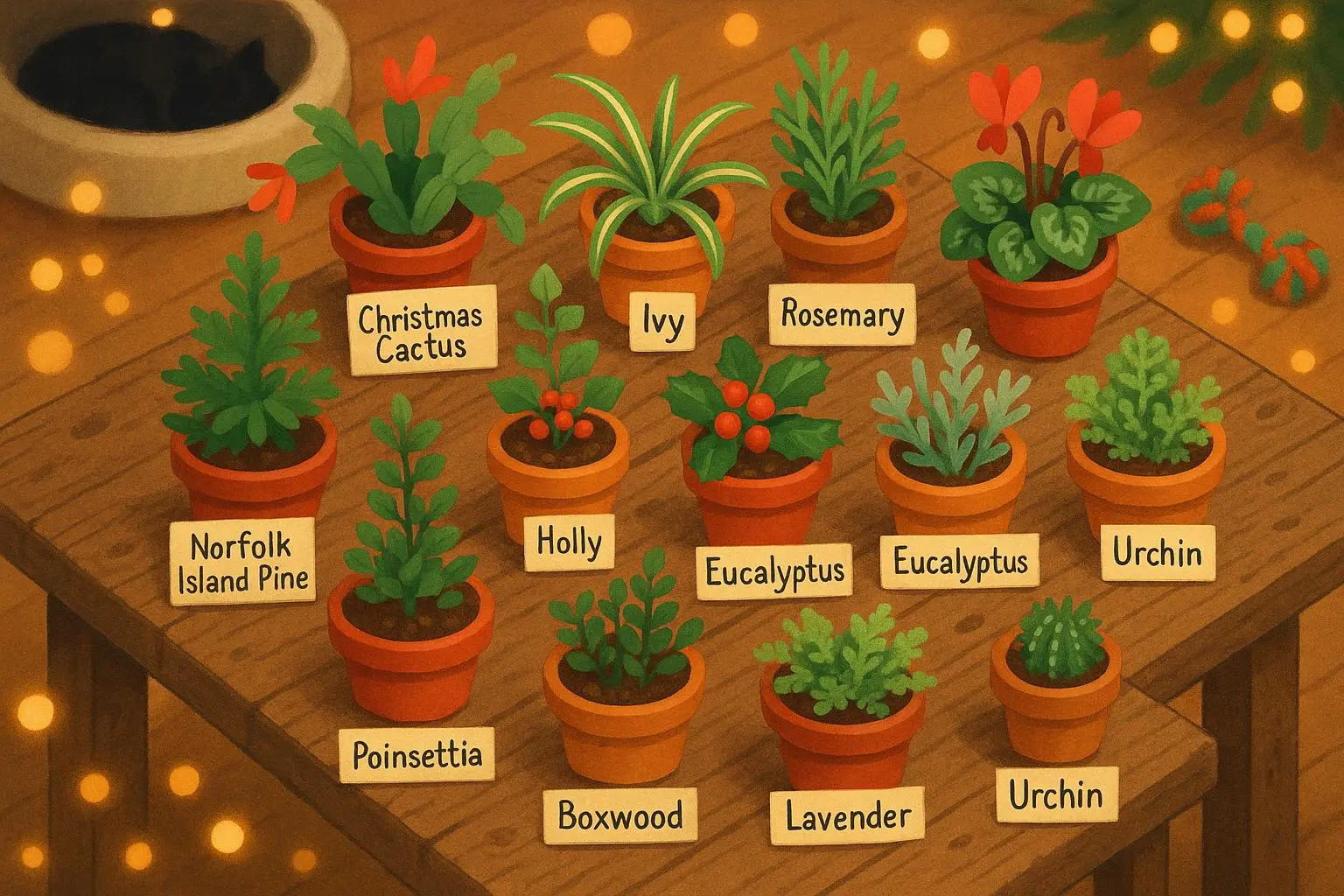
I love decorating for the holidays as much as the next person. Strings of lights, a fresh pine garland, the scent of cinnamon. But there’s a problem in a lot of homes: a curious cat or a poking dog can turn a festive display into a trip to the emergency vet. Traditional favorites like Mistletoe, Holly, and certain Lilies are not just pretty—they can be seriously dangerous. And even the ubiquitous poinsettia has a reputation that’s a little blown out of proportion, though it can still irritate the stomach if eaten in quantity.
Here's what I learned the hard way: you don’t have to choose between beauty and safety. You can have both. I pulled together 12 holiday-ready plants that are non-toxic for both cats and dogs, plus practical notes on care, seasonal appearance, and how to place them so your pets stay curious—not curious about poison, just curious about the next toy under the tree.
If you’re short on time, skip to the printable shopping checklist at the end. I’ve also included quick photo cues so you can identify each plant in a nursery quickly.
And because real life beats ideal scenarios, I’ve tucked in a few personal moments and a couple of bite-sized tips you can actually use this season.
A quick note before we dive in: safety isn’t a no-chew guarantee. It’s about reducing risk. You’ll still want to watch your pets and teach gentle boundaries around decor. The plants here are chosen because they’re non-toxic and less likely to incite a dramatic vet visit, not because they’ll never tempt a pet.
A moment I can’t forget from last December sticks with me. I had a parlor palm perched on a sturdy stand near a bay window. My cat liked to perch on the opposite chair and eyeballed the palm like a tiny green treasure chest. I’d planned for “pet-proof” by design, but what I’d overlooked was the soil. One afternoon I found fresh paw prints in the soil and a few dislodged pebbles on the rug. Not dangerous, but a mess I decided to fix with heavier pot covers and a simple, inexpensive soil barrier. It’s the little things—like a good soil cover—that save you a lot of cleanup during busy weeks.
The truth is, this isn’t about banning greenery. It’s about curating a safer, easier-to-care-for holiday display that still looks designed, not slapped together. Below you’ll find 12 picks with real-world care details, seasonal vibes, and tips you can apply right away.
Section 1: Festive Blooms and Bracts
These plants give you color and drama without the risk. They’re the showstoppers that still respect your pets.
- Christmas Cactus (Schlumbergera)
- Appearance: Arching stems topped with bright tubular blooms in pink, red, or white. They look delicate but are surprisingly sturdy.
- Care level: Easy to intermediate. Bright indirect light, steady moisture during bloom, then a touch less in between.
- Safety: Non-toxic. It’s a perfect stand-in for holiday cacti that can be avoided by curious mouths.
- Propagation: Simple stem cuttings. Take a 2-3 inch piece after flowering, let the cut end callous for a day or two, plant in light, well-draining soil, and keep evenly moist.
- Placement tip: Elevate on a shelf or high table. It’s eye-catching and out of reach for most pets.
- Phalaenopsis Orchid
- Appearance: Elegant, long-lasting blossoms in white, purple, or pink with a tall, graceful stem.
- Care level: Intermediate. Water sparingly, humidity helps, and a thorough soak every couple of weeks is better than light, frequent watering.
- Safety: Non-toxic. It provides height and a touch of luxury without the danger.
- Placement tip: Orchids like to be up high and away from enthusiastic noses. Mantles, tall pedestals, or a back corner of the hutch work nicely.
- African Violet (Saintpaulia)
- Appearance: Petite rosettes of fuzzy leaves with cluster blooms in purples, pinks, and whites.
- Care level: Intermediate. Warmth, consistent moisture, and avoiding water on leaves are the keys.
- Propagation: Easy; leaf cuttings into soil or water-rooting will multiply quickly.
- Placement tip: Perfect for a sunny kitchen counter or a bright north-facing window.
- Bromeliad (Guzmania, Vriesea)
- Appearance: A bold central bract that can be red, orange, or yellow, with a tropical vibe.
- Care level: Easy. Keep the central cup lightly filled with water and give bright indirect light.
- Safety: Non-toxic. The dramatic color is hard to beat for a centerpiece.
- Propagation: After flowering, the plant offsets small “pups” that you can pot up for new specimens.
Section 2: Decorative Foliage and Greens
The greenery side of the equation: lush, versatile, and often more forgiving if your space is a little dimmer or has a busy holiday schedule.
- Rosemary Tree (Rosmarinus officinalis)
- Appearance: A fragrant, evergreen shrub pruned into a little tree shape.
- Care level: Intermediate. Bright light, even attention to watering (let it dry a bit between drinks).
- Safety: Non-toxic and edible, which makes it a nice, scent-forward alternative to pine branches.
- Placement tip: A sunlit sill is ideal. The strong rosemary aroma is a natural deterrent for some nibbling pets.
- Parlor Palm (Chamaedorea elegans)
- Appearance: Delicate, feathery fronds that add height and a tropical texture.
- Care level: Easy. Tolerates lower light and forgiving on watering.
- Safety: Non-toxic. A great safe alternative to more problematic houseplants.
- Placement tip: Put it on a pedestal or stand so it’s less tempting to reach from a couch or chair.
- Prayer Plant (Maranta leuconeura)
- Appearance: Deep green leaves with red veins that fold up at night like tiny hands in prayer.
- Care level: Intermediate. Likes humidity and steady moisture.
- Propagation: Simple from cuttings or divisions.
- Placement tip: Best in a brighter bathroom or kitchen window where humidity is naturally higher.
- Boston Fern (Nephrolepis exaltata)
- Appearance: Classic cascading fronds that play nicely in hanging baskets or on tall stands.
- Care level: Intermediate. It drinks a lot of water and loves humidity; it doesn’t love dry air.
- Propagation: Divide the root ball to create new plants.
- Placement tip: A bathroom corner or a bright, humid kitchen offers ideal conditions.
Section 3: Low-Maintenance and Texture-Forward Plants
For folks who want impact without babysitting the plants, these options deliver with a little more resilience.
- Echeveria (Succulent)
- Appearance: Perfect rosettes with color tips—color shifts under different light.
- Care level: Easy. Bright light, very infrequent watering.
- Propagation: Leaf cuttings or offsets are simple and quick.
- Aluminum Plant (Pilea cadierei)
- Appearance: Silvery patches on glossy green leaves give a frosty, icy look.
- Care level: Easy. Bright, indirect light; keep soil evenly moist but not soggy.
- Texture note: The metallic look is an instant upgrade to holiday tablescapes or shelves.
- Baby Rubber Plant (Peperomia obtusifolia)
- Appearance: Thick, glossy leaves that stay lush through winter.
- Care level: Easy. Tolerates lower light and drought for short periods.
- Propagation: Very forgiving from leaf or stem cuttings.
- Spider Plant (Chlorophytum comosum)
- Appearance: Arching leaves with “spiderettes” that dangle like tiny helpers.
- Care level: Very easy. Nearly impossible to kill for the average owner.
- Safety nuance: Non-toxic, but the spiderettes can be irresistible to cats in particular. It’s a harmless attraction, but you’ll want to monitor chewing and overhead trajectories if you hang them.
A practical aside: guarding against pet interest is often about a simple mix of design and deterrents. I’ve found bitter apple sprays (pet-safe versions) help a lot when used on leaves you want to stay intact. A decorative barrier—like a terrarium for smaller choices or decorative covers for soil—also reduces the chance of digging or nibbling and buys you time during the busiest weeks.
Section 4: Essential Pet-Proofing and Placement Ideas
Non-toxic doesn’t mean invisible. If a plant is out in the open, a curious mouth can still take a nip. Here are some easy, practical moves that make a big difference.
- Elevate, elevate, elevate: Use tall stands, shelves, and hanging planters. The goal is to move the greenery into spaces pets don’t frequent daily—mantels, high bookcases, and bay windows that your cat can’t easily reach.
- Create boundary zones: A shallow layer of decorative stones or a thin layer of pebbles on top of the soil means a dog or cat won’t be tempted to dig. It’s cheap, it looks intentional, and it works.
- Use bitter deterrents: A safe bitter spray around the plant’s base or on the foliage near the edges reduces chewing without harming your pet.
- Treat the pot like furniture: A sturdy pot with a broad base minimizes tipping accidents and makes it less tempting for a jumpy dog to knock over.
- Plan a few “safe zones”: If your pet loves to investigate, assign a few pet-friendly zones with your own non-toxic greens. They’ll learn those areas are their spaces, not the holiday stage.
Printable Shopping Checklist
- Christmas Cactus
- Phalaenopsis Orchid
- African Violet
- Bromeliad
- Rosemary Tree
- Parlor Palm
- Prayer Plant
- Boston Fern
- Echeveria
- Aluminum Plant
- Baby Rubber Plant
- Spider Plant
The list above isn’t just a shopping list; it’s a map for a safer, more forgiving holiday home. It helps you avoid the panic of a “what if” moment when a curious paw noses around a festive display.
Section 5: Propagation on a Budget (Smart, Not Scary)
If you’re like me and love to stretch a dollar, you’ll appreciate how easy many of these plants propagate. Here are a few quick tips that worked in my house:
- Stem cuttings from Christmas Cactus and Bromeliads root quickly in a small amount of damp sphagnum or standard potting mix. Keep them warm and out of direct sun until they anchor.
- African Violets devour baby steps. A single leaf with a half-inch petiole can root in a month. Be patient, keep the leaf moist, and you’ll have a small starter plant ready for a friend or a swap.
- Spider Plant pups thrive with minimal attention. When you spot a pup—usually attached by a short stem—carefully snip it away and pot it in fresh soil. In a few weeks, you’ll have a new plant to gift or plant elsewhere in the house.
Personal money-saving note: in my family, we’d pick up a handful of cuttings from a friend who was thinning their collection right after holidays. It felt like a small gift, and you end the year with new, safe decor without breaking the budget.
Section 6: The Real-World Ho-Ho-Hold: A Short Story
Last year, I moved into a small apartment with a cat who loved to paw at anything at eye level. I wanted a display that looked festive but didn’t require constant supervision. I started with a Parlor Palm in a tall pot on a plant stand near the window and added a Christmas Cactus on a cabinet just out of reach. The first week was chaos. The cat knocked over a few planters, and the soil became a mess.
Then I did two things that changed everything: elevated the big pieces and added a few strategic barriers around the soil. The palm stayed tall and proud, the cactus bloomed with bright pink flowers, and I stopped worrying about the floor turning into a mini forest of dirt everywhere. It’s not perfect, but it’s stable, easy to care for, and the pets still think the living room is theirs—just with less chaos.
30-60 second aside: I also learned a tiny thing about placement that stuck. I moved a Boston Fern to a corner with higher humidity from the kitchen sink. It started looking lusher within a week. The plant felt happier, and so did the cat. It’s a small adjustment that paid off big.
Section 7: The “What If” Scenarios and Quick Wins
- If you have a particularly curious cat: go high with your most valued plants and consider using a terrarium for smaller options. It adds a sense of design and a real barrier.
- If your dog loves to investigate soil: cover it with decorative stones or moss so digging isn’t as attractive and the soil doesn’t end up on your rug.
- If light is tight: favor the Parlor Palm, Prayer Plant, and Spider Plant. They tolerate lower light and still bring life to the room.
Section 8: Photo Quick-ID Guide (Quick Reference)
- Christmas Cactus: segmented stems with bright flowers in late fall/early winter.
- Phalaenopsis Orchid: broad, flat petals with a tall central stalk; a refined, elegant look.
- African Violet: compact rosette with soft leaves and tiny cluster blooms.
- Bromeliad: bold central bract with tall color.
- Rosemary Tree: evergreen, needle-like leaves with a tree-like silhouette.
- Parlor Palm: slender trunk with a plume of delicate fronds.
- Prayer Plant: dark leaves with bold red veins; leaves fold at night.
- Boston Fern: cascading fronds that form a lush curtain.
- Echeveria: compact rosette with pointed leaves.
- Aluminum Plant: green leaves with silvery patches.
- Baby Rubber Plant: thick, glossy leaves on a sturdy stem.
- Spider Plant: arching leaves with dangling “spiderettes.”
Section 9: A Quick Note on Toxicity and Real-Life Safety
You’ll see a lot of scare headlines around houseplants and pets. The science is nuanced. The ASPCA provides a comprehensive list of toxic vs. non-toxic plants, and Kentucky-based veterinary guidance has emphasized the gastrointestinal upset rather than fatal outcomes for many “harmless” plants when eaten in quantity. For holiday décor, the goal is to minimize ingestion risk while maximizing enjoyment. If your pet shows unusual symptoms after nibbling on a plant—vomiting, diarrhea, drooling, lethargy—call your vet or a poison control line immediately. It’s always better to check than to guess.
References and citations back this up; see the end notes for more details and sources that informed these plant choices.
Closing thoughts: your tree and garlands can glow with safety and style. The 12 picks above are a practical, tested mix that keeps the season bright without inviting drama. A little planning, a few elevated spots, and maybe a tiny bit of soil camouflage go a long way toward a holiday home your pets won’t want to explore in the middle of the night.
References
ASPCA (2023). Toxic and Non-Toxic Plants List.
Volmer, P. A., Khan, S. A (2019). Plant Poisoning in Small Animals. Veterinary Clinics of North America: Small Animal Practice, 49(2), 205-218.
The Royal Horticultural Society (2022). Keeping Houseplants Safe from Pets.
ASPCA (2023). Spider Plant Safety Note.