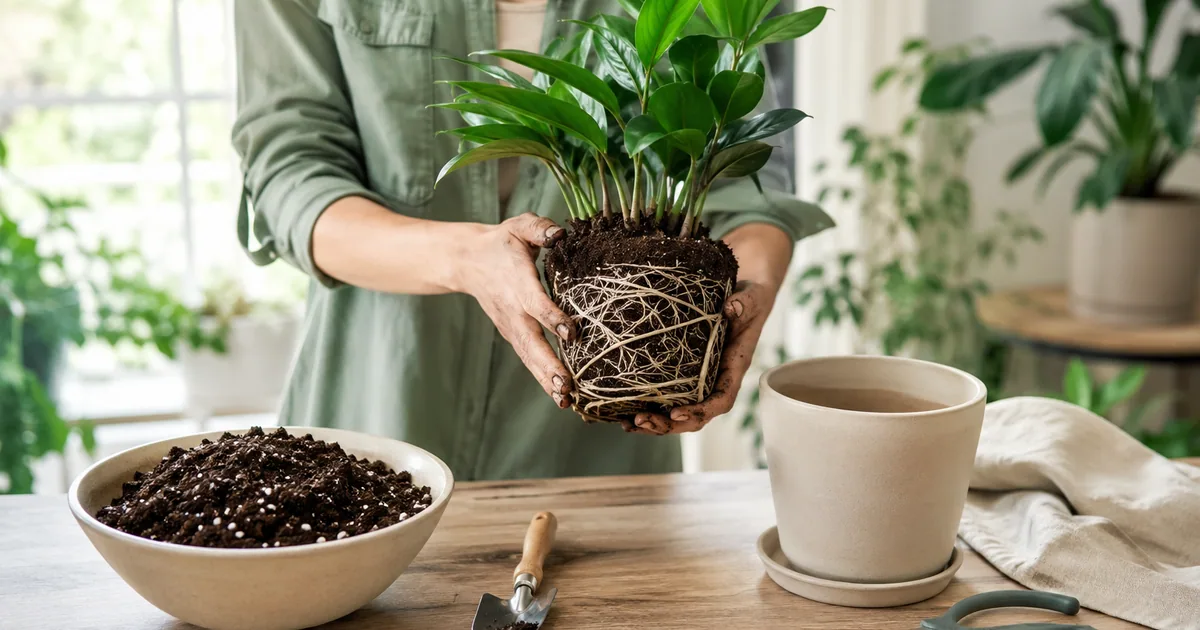
Quick answer: Repot in spring when the plant shows a real need, such as a crowded root system, failed mix, blocked drainage, unstable growth, or root health concerns. Do not repot every plant because the calendar changed. Choose a modestly larger container when upsizing, preserve healthy roots, and match the mix to the species.
Spring can be convenient because light and active growth are increasing for many houseplants. The plant’s condition still matters more than the month.
Save baseline photos and care notes in Plant Doctor before you disturb the root ball.
Does this plant need repotting?
Strong reasons include:
- Roots circle densely around the root ball.
- Roots emerge through drainage holes.
- Water runs around a shrunken or water repellent root ball.
- The mix has collapsed and stays wet too long.
- The plant is unstable in its current container.
- Growth is limited despite appropriate light and care.
- Salt accumulation cannot be managed safely in the current mix.
- Root disease requires inspection and removal of failed material.
Weak reasons include:
- The pot looks old.
- A single root is visible.
- The plant came from a shop recently.
- The calendar says spring.
- You want to fertilize through fresh mix.
Some plants tolerate or prefer a snug pot. Check the species before upsizing.
Pre-repotting checklist
- Identify the plant and its root and drainage needs
- Confirm the reason for repotting
- Choose a pot with working drainage
- Select a suitable mix
- Clean tools and work surface
- Prepare labels and baseline photos
- Water according to species and root ball condition
- Keep the plant out of intense sun during the work
The University of Georgia indoor plant guidance discusses container, drainage, medium, and environmental needs as connected parts of indoor plant care.
Choose the container
When a healthy plant genuinely needs more room, use a modest increase rather than a dramatic jump. Excess unused mix can stay wet longer than the rooted area.
Check:
- Drainage holes.
- Pot stability.
- Material and drying behavior.
- Root shape.
- Space in the selected location.
- Whether the decorative cover pot can hold hidden drainage water.
Do not add stones as a substitute for a drainage hole.
Choose the mix
There is no universal “best houseplant soil.” Match air space, water retention, particle size, and organic content to the plant and your environment.
- Succulents generally need a faster draining structure.
- Moisture preferring tropicals may need more even retention with air space.
- Epiphytes often need a coarse, airy mix.
- Very large plants need both drainage and physical support.
Avoid reusing mix from a diseased plant without a validated sanitation reason and method.
Inspect roots calmly
Slide the root ball out with support.
Healthy roots vary in color by species and mix, but are generally firm. Warning signs include:
- Soft or sloughing roots.
- A sour smell.
- Hollow dead roots.
- Blackened tissue spreading toward the crown.
- Dense circling that prevents even moisture.
Do not tease or cut healthy roots aggressively. Remove failed tissue with clean tools only when necessary.
If root rot is present, follow the root rot recovery guide instead of a routine upsize.
Repot step by step
- Cover the drainage opening only with a suitable screen if needed.
- Add enough mix to place the plant at its previous depth.
- Position the root ball without burying the crown.
- Fill around it gently.
- Settle the mix without compacting it hard.
- Water according to the plant and condition of the mix.
- Let excess drain fully.
- Return the plant to stable, appropriate light.
Do not fertilize immediately unless the product and plant care plan specifically call for it. Fresh mixes may already contain nutrients.
Aftercare for the first two weeks
- Keep light stable and appropriate.
- Avoid intense new sun exposure.
- Check moisture in the new root zone.
- Keep drainage water out of the cover pot.
- Pause unnecessary pruning.
- Watch for continuing wilt, yellowing, or stem softness.
- Photograph new symptoms before treatment.
Some temporary adjustment can occur. Rapid decline, a soft crown, or persistently wet mix needs investigation.
When to wait
Delay a routine repot when:
- The plant is flowering and sensitive to disturbance.
- It is recovering from heat, cold, or severe drought.
- A pest has not been identified or contained.
- The new location has inadequate light.
- You do not yet have suitable mix or drainage.
For newly purchased plants in isolation, use the repot versus wait decision matrix.
Avoid these repotting mistakes
- Jumping to a pot many sizes larger.
- Burying the crown.
- Compacting mix tightly.
- Cutting healthy roots to make them fit.
- Using the same mix for every species.
- Watering repeatedly before the new mix begins to dry.
- Combining repotting, pruning, fertilizing, and a major light move in one day.
References
- University of Georgia Cooperative Extension. Growing Indoor Plants with Success.
- University of California Statewide IPM Program. Houseplant Problems.
- University of Maryland Extension. Fertilizer Toxicity or High Soluble Salts in Indoor Plants.