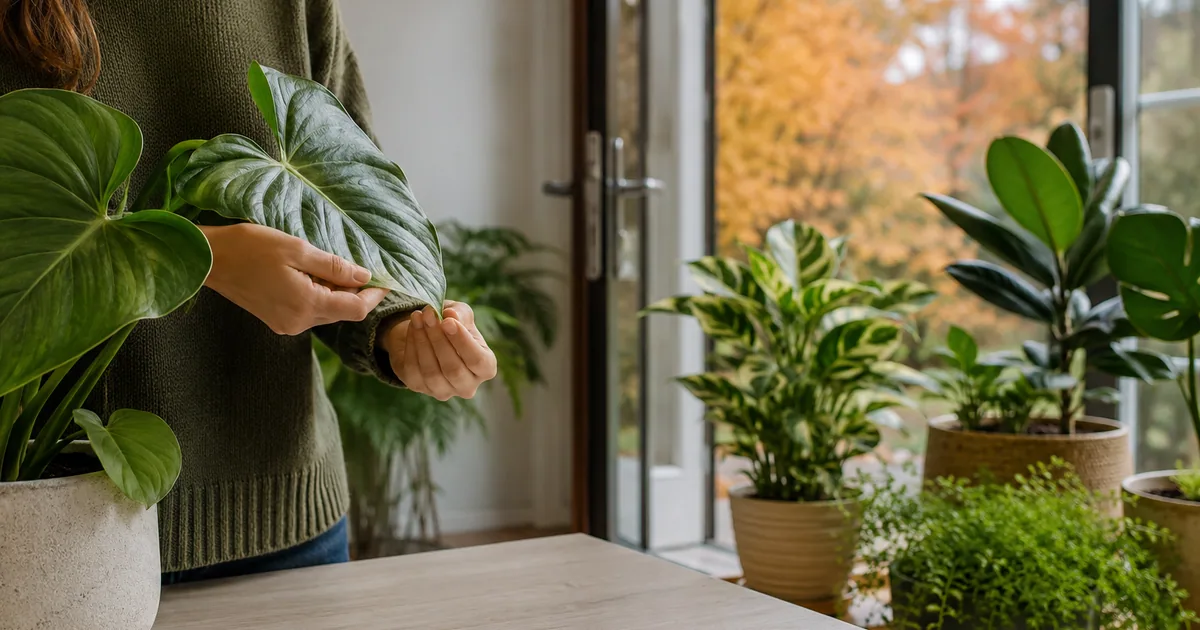
Quick answer: Inspect outdoor houseplants before they cross the door, isolate them from the indoor collection, clean pots and fallen debris, and move them before nights become too cold for the species. Recheck leaf undersides, stems, and soil during quarantine, then reduce watering as indoor light and growth slow.
The goal is not to sterilize a plant. It is to catch visible pests, reduce hitchhikers, and give the plant time to adjust without exposing the rest of your collection.
If you find unexplained spotting, webbing, or distorted growth, photograph it outdoors and use Plant Doctor’s browser diagnosis before applying a treatment.
Choose the move date by conditions
Calendar dates vary by climate and plant. Consider:
- The plant’s temperature tolerance.
- Forecast night temperatures.
- Wind exposure.
- Indoor light availability.
- Whether you have quarantine space.
Move before an emergency cold night forces you to skip inspection. Tropical plants generally need protection sooner than cool tolerant species, but individual requirements vary.
The outdoor inspection
Work in bright indirect daylight.
Leaves
Inspect upper and lower surfaces. Look for stippling, trails, holes, spots, webbing, sticky residue, black specks, and eggs.
Stems and joints
Check nodes, leaf axils, bark crevices, and supports. Scale insects and mealybugs often shelter in protected areas.
Soil and drainage
Remove fallen leaves and weeds. Check the rim, drainage holes, saucer, and the space between a nursery pot and cover pot.
Pot exterior
Brush soil, algae, and debris from the outside. Check beneath the pot for slugs, snails, webs, and egg masses.
The Clemson Cooperative Extension houseplant insect guide illustrates common indoor plant pests and management options.
Clean without creating a new problem
- Rinse sturdy foliage with a gentle stream when suitable for the species.
- Wipe broad leaves with plain water and a soft cloth.
- Remove dead material with clean tools.
- Wash reusable saucers and the outside of pots.
- Let foliage dry with airflow before plants are crowded indoors.
Do not apply a pesticide merely because a plant was outdoors. Identify the problem first and follow the product label. Test any compatible contact product on a small area when the label advises it.
Quarantine that works in a real home
Place returning plants away from established plants. The exact duration depends on pest biology and what you observe, so repeated inspection matters more than a ceremonial waiting period.
During quarantine:
- Keep enough light for the plant.
- Avoid touching foliage between groups.
- Use separate cleaning cloths where practical.
- Check sticky cards as monitoring tools, not as proof that the plant is pest free.
- Inspect at least weekly and photograph suspicious changes.
Use the plant quarantine checklist for a compact room by room process.
Reset light gradually
Outdoor shade can still be brighter than an indoor window. Sudden reduction may cause leaf drop or stretched growth.
- Choose the brightest appropriate indoor position.
- Clean the window and leaves.
- Rotate only after the plant has settled, not every day.
- Add a suitable grow light when the natural window is insufficient.
- Keep foliage from touching cold glass.
The phone light meter placement guide can help compare locations, while recognizing that phone sensors provide approximate readings.
Reset watering after the move
Indoor plants often dry more slowly because light, airflow, and active growth decrease. Do not preserve the outdoor watering schedule.
- Check the root zone before watering.
- Empty drainage water.
- Pause fertilizer until the plant shows stable active growth.
- Watch for yellowing, edema, or mix that remains wet.
The University of Illinois Extension explains water related tissue injury in its drowning and edema resource.
What to do when you find a pest
- Keep the plant isolated.
- Identify the pest as closely as possible.
- Remove heavily infested dead material when appropriate.
- Choose physical, cultural, biological, or labeled chemical controls for that pest and plant.
- Repeat inspection according to the pest’s life cycle and the product label.
- Inspect nearby plants.
Do not mix home remedies or increase a labeled concentration. Pets, children, pollinators, and plant sensitivity all affect treatment choice.
A door side autumn checklist
- Forecast checked
- Leaf tops and undersides inspected
- Stems and joints inspected
- Soil surface and drainage holes inspected
- Dead debris removed
- Pot exterior and saucer cleaned
- Quarantine location prepared
- Indoor light selected
- Watering schedule retired
- Baseline photos saved
References
- Clemson Cooperative Extension. Common Houseplant Insects and Related Pests.
- University of California Statewide IPM Program. Houseplant Problems.
- University of Illinois Extension. Drowning and Edema.