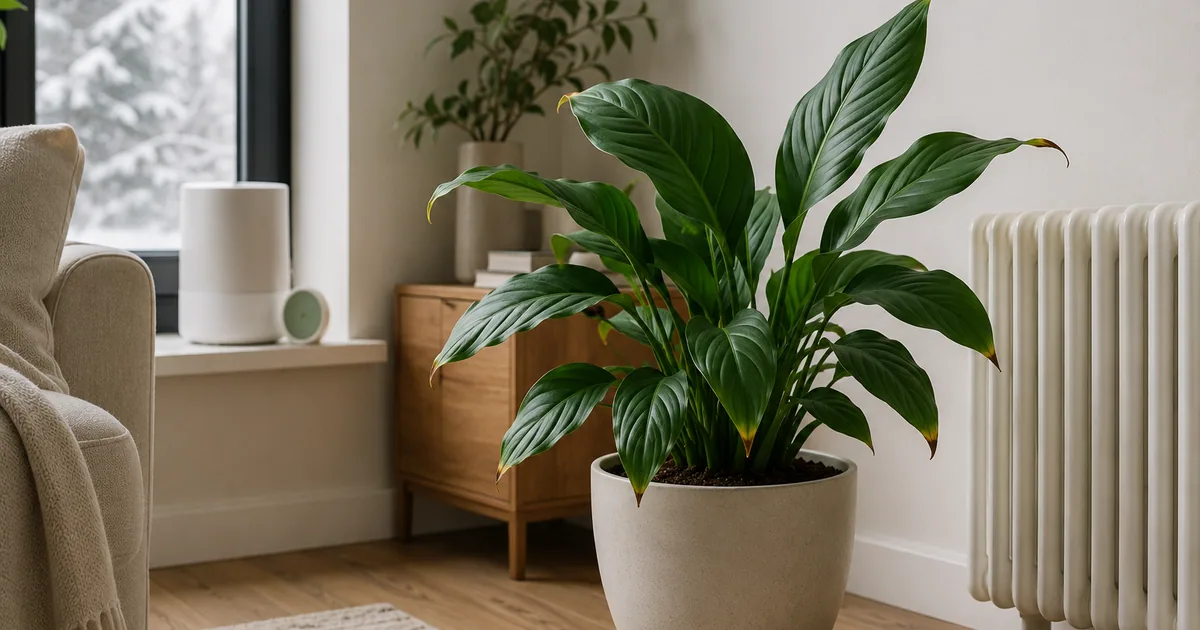
Quick answer: Heating can contribute to brown tips by lowering humidity, warming leaves unevenly, and changing how quickly pots dry. Brown tips can also come from inconsistent watering, soluble salts, water quality, damaged roots, or normal aging. Check the air, root zone, water source, and damage pattern before adding humidity or water.
A humidifier can help a plant that needs higher humidity. It cannot fix saturated roots or salt accumulation. Treat the cause you can observe.
If several symptoms overlap, use Plant Doctor’s browser diagnosis with a whole plant photo and a close view of the affected margin.
Map the heating exposure
Note whether the plant is:
- Directly above a radiator.
- In the path of a heating vent.
- Close to a fireplace or hot appliance.
- Between hot airflow and cold glass.
- In a room with large day and night swings.
Damage concentrated on the side facing hot airflow supports an environmental contribution. Similar tips around the whole plant call for a wider assessment.
Check humidity without guessing
Use a basic hygrometer near the plant. A reading from another side of the room may not represent the leaf environment.
The Colorado State University temperature and humidity guidance notes that houseplant requirements vary. Choose a humidity range appropriate for the species rather than pursuing the highest possible number.
If humidity is unsuitable:
- Move the plant out of direct heated airflow.
- Use a clean humidifier with regular maintenance.
- Group compatible plants with space for airflow.
- Keep foliage dry enough to reduce disease risk.
Pebble trays have limited room scale effect. They must not leave the pot standing in water.
Separate air dryness from root dryness
Heating can dry the top layer while deeper mix remains moist.
- Check below the surface.
- Lift the pot.
- Look for standing water.
- Compare the new drying interval with summer.
- Inspect roots when the plant is limp despite wet mix.
Do not increase watering frequency solely because the air feels dry.
Check salts and water quality
Soluble salts may appear as a pale crust on the mix or pot. Sensitive plants can develop brown margins when salts accumulate.
Review:
- Fertilizer frequency and concentration.
- Whether the plant was fed while growth slowed.
- Tap water mineral content.
- Whether drainage is adequate.
- How long the current mix has been in use.
The University of Maryland Extension explains symptoms and corrective context for high soluble salts in indoor plants.
If the root system is healthy and the mix drains freely, a careful flush may help remove soluble salts. Do not flush a pot with suspected root rot.
Read the damaged tissue
- Dry brown tips: humidity, salts, water inconsistency, roots, or normal aging may contribute.
- Soft dark tips: investigate cold, waterlogging, or disease.
- Pale patches on exposed leaf surfaces: consider sunburn.
- Yellowing plus wet mix: investigate roots and light.
- Fine stippling or webbing: inspect for spider mites.
Use the peace lily brown tip guide for a species specific water and salt comparison.
A safe correction sequence
- Move the plant away from direct hot airflow.
- Measure humidity near the leaves.
- Check root zone moisture and drainage.
- Review fertilizer and water history.
- Correct one major factor at a time.
- Photograph new growth weekly.
- Judge improvement by healthy new tissue, not by old tips turning green.
Brown tissue will not recover. Trim for appearance only after the pattern is stable, using clean scissors and leaving green tissue intact.
Avoid these winter mistakes
- Running a dirty humidifier.
- Crowding damp foliage without airflow.
- Watering by the calendar.
- Fertilizing a stressed plant.
- Placing a tropical plant against cold glass.
- Treating every brown tip as low humidity.
- Removing most leaves at once.
For broader humidity decisions, see the practical humidity guide.
References
- Colorado State University Extension. Houseplants: Temperature and Humidity.
- University of Maryland Extension. Fertilizer Toxicity or High Soluble Salts in Indoor Plants.
- University of Georgia Cooperative Extension. Growing Indoor Plants with Success.