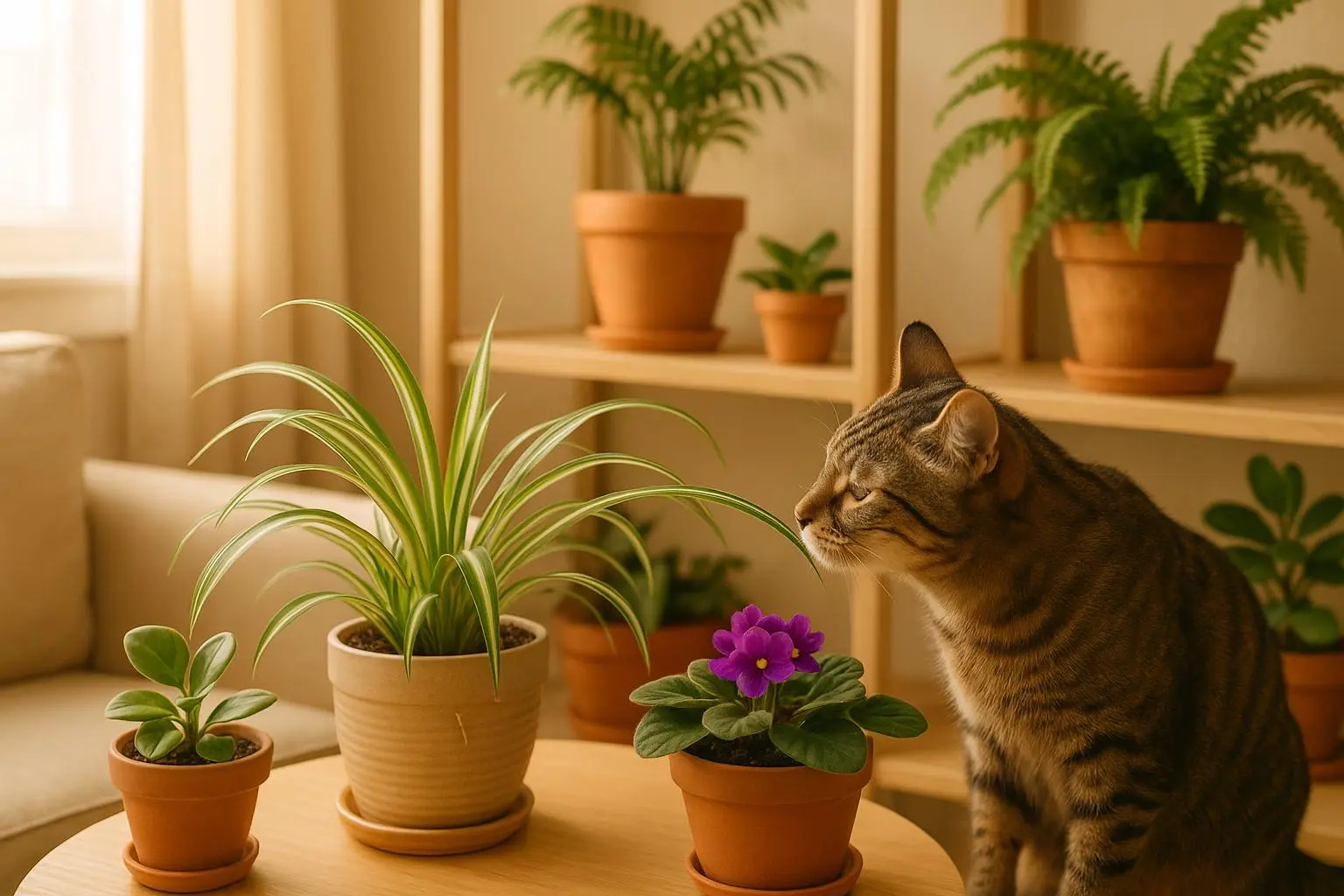
You want plants that make your home feel alive — not a potential trip to the emergency vet. I’ve killed a few ferns, been outwitted by a determined kitten, and learned to choose plants that actually live where cats live. This guide lists 12 houseplants that are non-toxic (per the ASPCA) and tough enough to handle normal cat behavior: nibbling, batting, and the occasional pot-dig.
I’ll tell you what to expect from each plant, how your cat will likely treat it, where to put it so both of you win, and what to swap in if your current favorite is a hazard. There’s a printable shopping checklist at the end. No jargon, no moralizing — just what works.
How I tested these (short story)
Two winters ago I adopted a rescue, Junie, who loved chewable, droppable things. She chewed my beloved pothos into sad strips in a week. So I started replacing plants one by one and watching behavior for two months: which plants were pawed, which were nibbled, which were ignored. I also cross-checked each species against the ASPCA list.
Outcome: Spider plants and cat grass became Junie’s toys (fine), Calathea was ignored (fine), and money tree got a single exploratory nibble and lived. I lost a philodendron to the trash bin and slept better for it. The practical takeaway: pick resilient, non-toxic plants and give your cat safe alternatives nearby.
Micro-moment: I still remember the absurd sight of Junie face-planking into a pot of cat grass like it was a salad bar — tenacity wins where deterrents fail.
The safety baseline
A quick note: “non-toxic” means the plant won’t cause major poisoning. It doesn’t mean eating lots of it won’t make your cat feel sick. Any large ingestion of plant material can cause vomiting or diarrhea[^1]. If your cat’s clearly distressed, call your vet or the ASPCA Animal Poison Control right away[^1].
The 12 cat-safe champions (what to expect and how to care)
I organized each entry to cover: common cat hazard (nibbling, shredding, batting), placement tips, and potting/watering advice you can actually use.
1) Spider Plant (Chlorophytum comosum)
- Care level: Easy.
- Cat hazard: High interest — dangling babies are irresistible. Cats chew leaves but it’s non-toxic.
- Placement tip: Hang it or place it on a high shelf so the tips are playable but not destructive. A trailing pot on a bookcase works well.
- Potting & watering: Well-draining potting mix; water when top inch is dry.
- Swap suggestion: Replace toxic pothos with a spider plant for a similar fast-growing look.
Why I like it: It doubles as a safe cat toy. Junie loved batting the spiderettes; I swapped a heavy ceramic hanging pot to stop mid-air ambushes.
2) Cat Grass (Dactylis glomerata or oat/barley mixes)
- Care level: Very easy; often sold as a grow-your-own kit.
- Cat hazard: Encouraged — meant to be nibbled; helps digestion and hairballs.
- Placement tip: Keep one small pot of cat grass where your cat lounges. Rotate pots so they’re fresh.
- Potting & watering: Organic potting soil; keep moist but not waterlogged.
- Swap suggestion: Instead of letting cats nibble your basil, offer cat grass as the on-purpose chewable.
Pro tip: Keep cat grass in a low planter on a mat — less soil tracked across the floor.
3) Parlor Palm (Chamaedorea elegans)
- Care level: Easy to moderate.
- Cat hazard: Low to moderate — fronds are fibrous and generally unappealing for sustained chewing.
- Placement tip: Place as a floor plant in living spaces; its height distracts cats from other targets.
- Potting & watering: Use a general potting mix; water when the top inch dries.
Design note: Looks tropical without the risk of sago palm poisoning.
4) Boston Fern (Nephrolepis exaltata)
- Care level: Moderate (likes humidity).
- Cat hazard: Moderate — fronds invite batting but are non-toxic.
- Placement tip: Hanging baskets are ideal. Cats usually don’t like the dampness of misted fronds.
- Potting & watering: Peat-based mix, consistently moist; mist regularly or keep in a humid room like a bathroom.
Placement trick: If your cat loves trailing leaves, hang the fern and set a cat-safe toy below.
5) Calathea varieties (e.g., Rattlesnake)
- Care level: Moderate (likes humidity and filtered light).
- Cat hazard: Low — patterned leaves are less appealing to chew.
- Placement tip: Bright, indirect light; avoid direct sun.
- Potting & watering: Use filtered or distilled water if your tap is hard; keep soil evenly moist but not soggy.
- Swap suggestion: Instead of dieffenbachia, choose Calathea for lush, dramatic leaves that are safe.
Personal note: Calathea asks for a little attention, but it rewards you with showy leaves and zero vet bills.
6) Haworthia (Haworthiopsis attenuata)
- Care level: Easy (succulent).
- Cat hazard: Low — spiky texture deters chewing and lying-on.
- Placement tip: Sunny windowsill that your cat already loves for napping; it’s unlikely to be bothered.
- Potting & watering: Cactus/succulent mix; water sparingly and allow soil to dry.
Why it works: Good starter plant when you’re unsure how curious your cat will be.
7) Peperomia (e.g., Watermelon Peperomia)
- Care level: Easy to moderate.
- Cat hazard: Low — thick leaves are typically ignored.
- Placement tip: Tabletops, nightstands, or shelves where they add greenery without inviting digging.
- Potting & watering: Well-draining mix; water when topsoil dries.
Swap suggestion: Aesthetic alternative to pothos or philodendron without the toxicity.
8) African Violet (Saintpaulia ionantha)
- Care level: Moderate (bright, indirect light).
- Cat hazard: Very low — fuzzy leaves and small flowers are rarely interesting to cats.
- Placement tip: Stable surfaces away from frantic play zones.
- Potting & watering: Use a light mix and bottom-water to avoid crown rot.
Small but mighty: delightful color without risk.
9) Money Tree (Pachira aquatica)
- Care level: Low to moderate.
- Cat hazard: Moderate — curious cats might nibble lower leaves, but plant is non-toxic.
- Placement tip: Place higher or choose a braided trunk to discourage chewing.
- Potting & watering: Well-draining soil; water when topsoil dries.
Design swap: Keeps that sculptural, “statement plant” vibe without dieffenbachia danger.
10) Cast Iron Plant (Aspidistra elatior)
- Care level: Very easy.
- Cat hazard: Low — tough, leathery leaves rarely tempt cats.
- Placement tip: Great for dim corners where other plants fail.
- Potting & watering: Ordinary potting mix; very tolerant of neglect.
If you want a “plant and forget” option, this is it.
11) Areca Palm (Dypsis lutescens)
- Care level: Moderate.
- Cat hazard: Moderate — larger fronds invite batting but are non-toxic.
- Placement tip: Use it as a room divider or visual screen; position where fronds provide interest but aren’t near cat furniture.
- Potting & watering: Palm/general potting mix; water when top couple inches are dry.
Size advantage: Big palms can protect other plants by being the focus.
12) Echeveria (rosette succulents)
- Care level: Easy.
- Cat hazard: Low — firm leaves and compact form usually ignored.
- Placement tip: Keep in small decorative pots on high shelves or windowsills.
- Potting & watering: Fast-draining cactus mix; sparse watering.
Bonus: They’re photo-friendly and easy to replace if a clumsy cat nudges one.
Quick swaps: replace danger with similar looks
If your home currently has any of these common toxic plants, swap them with the safe option below:
- Pothos (toxic) → Spider Plant
- Philodendron (toxic) → Parlor Palm
- True lilies (toxic) → Boston Fern or Areca Palm
- Dieffenbachia / Dumb Cane (toxic) → Calathea
- Aloe vera (mildly toxic to cats) → Haworthia or Echeveria
Swapping doesn’t have to be instant. I propagated cuttings, then moved them to less-accessible rooms before donating the toxic originals.
Placement and deterrent tactics that actually work
Here's what I changed in my apartment after Junie’s demolition derby:
- Replace shallow pots with deeper ones. Cats dig less when they can’t easily flip the pot.
- Top dressing: decorative river stones or coarse mulch on soil surface. It discourages digging and looks tidy.
- Offer substitutes: one pot of cat grass per cat, placed low and accessible.
- Strategic hanging: use macramé or heavy hangers and place plants where cats can see but not reach.
- Scent deterrents: citrus peels in topsoil (works for some cats), or spraying bitter apple on lower leaves. Test a small amount first — some scents bother you as much as them.
- Bottom watering: keeps topsoil dry and less tempting; great for ferns and Calathea.
If you need an immediate barrier, a simple wire mesh collar sunk into the pot (decorative and effective) stops digging without suffocating roots.
Potting mixes and watering rules for cat households
- Use well-draining mixes to avoid root rot — soggy soil attracts cats and mold.
- Avoid fertilizers or insecticides with neonicotinoids or pyrethroids; these can harm pets if ingested.
- Consider using organic potting soil and letting commercial slow-release fertilizers cure outdoors before bringing plants in.
- Keep saucers clean — they can breed bacteria that interest cats.
- Bottom-watering: fill the saucer, let the pot soak for 15–30 minutes, then dump excess. Keeps cats from drinking from standing water and stops soil from being a cat litter substitute.
Signs your cat is overdoing it (what to watch for)
- Repeated vomiting after munching plant material
- Lethargy, drooling, pawing at mouth
- Diarrhea or decreased appetite
- Uncoordinated gait or tremors (rare, but urgent)
When in doubt, call your vet or the ASPCA Animal Poison Control. Have pictures and the plant name ready — scientific name helps.
Printable shopping checklist
Copy this to your phone notes or print it. Buy one or two starter plants, not a whole jungle at once.
[ ] Spider Plant [ ] Cat Grass (oat/barley mix) [ ] Parlor Palm [ ] Boston Fern [ ] Calathea [ ] Haworthia [ ] Peperomia (Watermelon) [ ] African Violet [ ] Money Tree [ ] Cast Iron Plant [ ] Areca Palm [ ] Echeveria (succulent) [ ] Top dressing: river stones or coarse gravel [ ] Cat-safe potting mix (organic, well-draining)
Shopping tip: ask for the botanical (Latin) name at the nursery to confirm species. If the label only says “fern” or “palm,” double-check.
Final thoughts (and a tiny confession)
You don’t have to sacrifice style for safety. Some of my favorite corners now have peeper-friendly greenery that Junie tolerates — and sometimes plays with — without risk. The goal isn’t a sterile, plant-free home; it’s an indoor garden that respects who lives there.
If you’re adopting, start with two things: cat grass and one indestructible plant (Cast Iron Plant or Haworthia). Let your cat explore and redirect chewing to the grass. After a few weeks you’ll spot patterns and can expand confidently.
Happy gardening — and safer snacking to your cat.
References
[^1]: ASPCA (2024). Toxic and Non-Toxic Plants List.