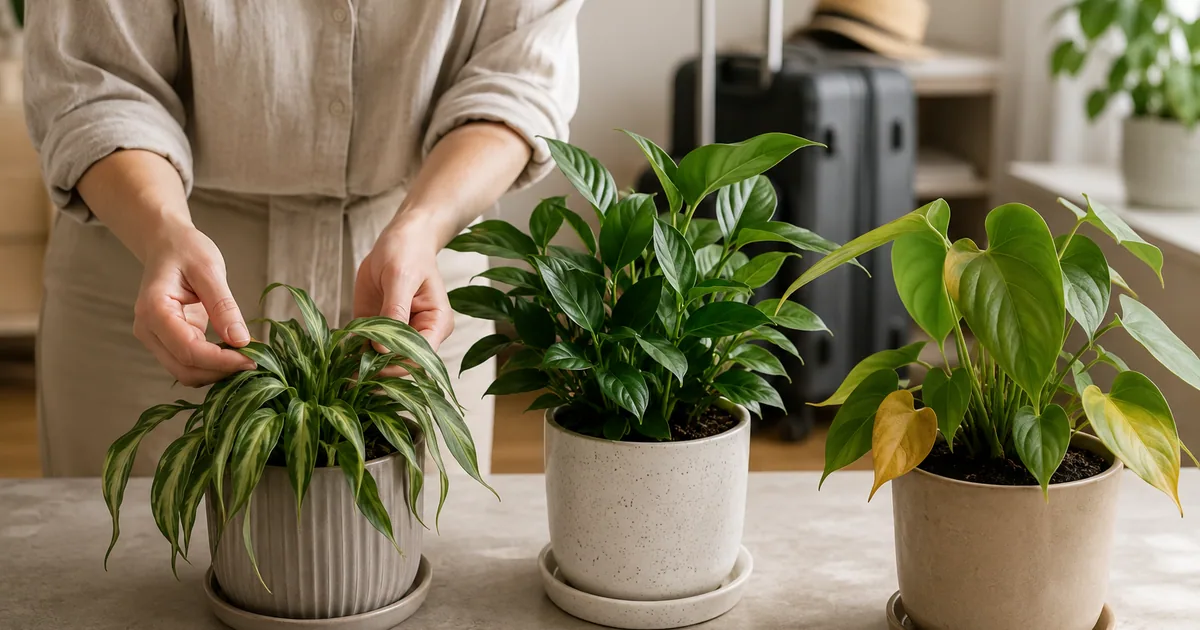
Quick answer: Do not water every plant as soon as you return. First sort plants into dry, wet, and uncertain groups. Check the root zone, drainage, smell, stems, and leaf pattern. Water genuinely dry plants thoroughly, isolate pest suspects, and inspect wet wilted plants for root trouble before adding anything.
The first hour matters because opposite problems can look similar. A dry plant and a plant with damaged roots may both droop. One needs water. The other may become worse if you add more.
Take photos before trimming or repotting. If the cause remains unclear, compare the whole plant and close leaf images with Plant Doctor’s browser diagnosis.
The first hour triage
Group A: Clearly dry
Signs include a very light pot, dry mix below the surface, leaves that feel thin or limp, and no sour smell.
Action:
- Move the pot to a draining area.
- Water slowly and evenly.
- Let excess drain completely.
- Keep the plant in bright indirect light.
- Reassess over the next day.
If dry mix repels water, apply it in two slow passes. Avoid leaving the pot submerged for a long period.
Group B: Wet and wilted
Signs include a heavy pot, persistently wet mix, yellowing, soft stems, a sour smell, or dark roots.
Action:
- Stop watering.
- Remove the inner pot from any water filled cover pot.
- Improve gentle airflow.
- Inspect roots when smell, softness, or continued decline suggests damage.
- Follow the root rot recovery guide if roots are brown, soft, or sloughing.
Group C: Uncertain
When the top is dry but the lower mix may be wet, test deeper and compare pot weight. Wait a few hours if needed. A delayed correct decision is safer than an immediate wrong one.
Read the leaf pattern
| Pattern | More likely direction |
|---|---|
| Limp leaves, light pot, dry root zone | Water deficit |
| Yellow leaves, heavy pot, wet mix | Excess water or root stress |
| Pale crisp patches on exposed side | Sunburn |
| Brown margins across several leaves | Heat, low humidity, salts, or inconsistent water |
| Fine stippling, webbing, distorted growth | Pest investigation |
| Soft spreading lesions | Disease or tissue collapse |
Use patterns as a starting point. The University of California IPM houseplant problems guide shows how several environmental and pest problems can overlap.
What to prune now
Remove:
- Fully dead leaves.
- Collapsed tissue that is becoming soft.
- Fallen debris on wet mix.
- Broken stems that cannot support themselves.
Keep:
- Leaves with substantial green tissue.
- Stable sunburn marks.
- Yellowing leaves that are still attached while the plant stabilizes, unless decay is developing.
Use clean tools and avoid a major cosmetic prune during acute stress.
A seven day recovery plan
Day 1
Triage, water only the dry group, empty standing water, isolate pests, and restore stable bright indirect light.
Days 2 and 3
Photograph progress from the same angle. Check whether leaves regain firmness, lesions spread, or the pot remains unusually wet.
Days 4 to 7
Resume normal checking, not the sitter’s schedule. Avoid fertilizer. Move plants back toward stronger light in steps if they spent the trip in shade.
Repot only when root condition, collapsed mix, or blocked drainage makes it necessary. Repotting every stressed plant adds another stressor.
Pest checks after travel
Warm rooms and missed inspections can allow pests to become more visible.
Check:
- Leaf undersides.
- New growth.
- Stem joints.
- The soil surface.
- Nearby window sills.
Look for webbing, sticky residue, pale stippling, cottony clusters, scale like bumps, flying gnats, or black specks. Isolate a suspect plant before cleaning it.
The Clemson Cooperative Extension common houseplant insect guide provides identification and management context.
Mistakes that delay recovery
- Watering all plants equally.
- Fertilizing a stressed plant.
- Moving a wilted plant directly into strong sun.
- Removing every marked leaf.
- Spraying an unidentified symptom.
- Repotting without checking roots.
- Returning a pest suspect to the collection.
If a snake plant is soft, curled, or brown, the three watering tests provide a plant specific comparison.
When expert help is appropriate
Contact a local extension service, plant clinic, or experienced horticulturist when:
- A valuable plant declines rapidly.
- Several plants develop the same spreading lesion.
- Roots and crown are extensively soft.
- A regulated or unfamiliar pest is suspected.
- A treatment label or pet safety question is unclear.
The Colorado State University diagnosing plant disorders guide explains why history, pattern, and environment are essential diagnostic evidence.
References
- University of California Statewide IPM Program. Houseplant Problems.
- Clemson Cooperative Extension. Common Houseplant Insects and Related Pests.
- Colorado State University Extension. Diagnosing Plant Disorders.