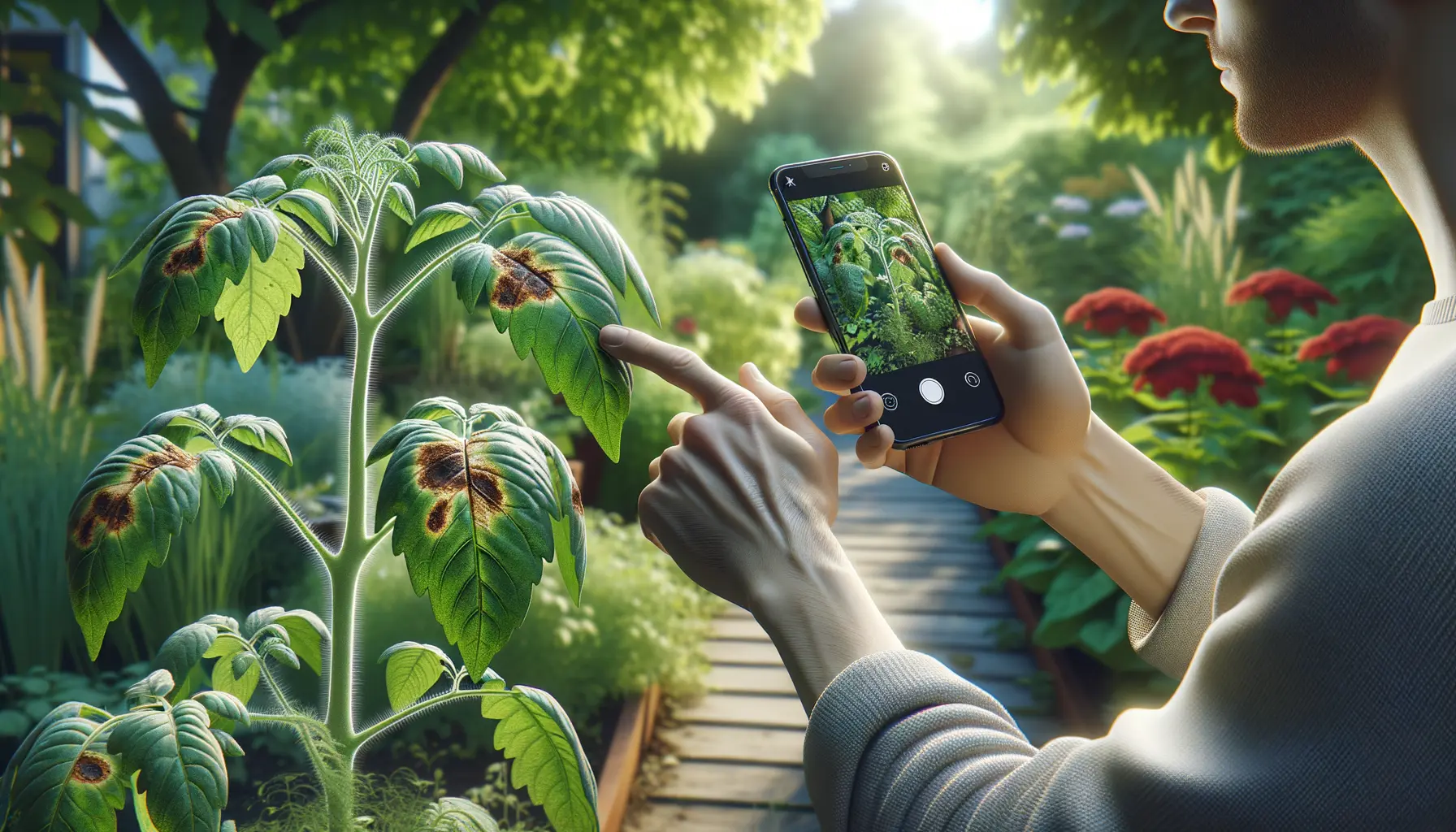
I started using plant identification apps like many of us do — a random curiosity about a mysterious leaf, then a full-blown obsession when my favorite tomato plant wasn’t thriving. For this roundup, I compared leading free and freemium plant disease ID apps in backyard plots, community gardens, and small farms. Below is a practical roundup that covers diagnosis quality, offline use, privacy, and cost in 2025.
One-line takeaway: These apps are excellent first filters — use them for triage, not as the only authority.
How I compared the apps
- Test period: March 2023 — August 2025.
- Devices used: iPhone 12 (iOS 16), Pixel 5 (Android 13), Samsung A52 (Android 12).
- Method: I compared common symptom cases across tomato, potato, grape, apple, ornamentals, and houseplants. For each case I captured 3–5 photos (wide, close-up, underside, stem) and ran each app with the clearest photos.
- Metrics recorded: app diagnosis quality, confidence score clarity (when provided), suggested treatment steps, offline behavior, and privacy/policy notes.
Quick comparison table
| App | Best fit | Free option | Disease diagnosis depth | Confidence / uncertainty | Treatment guidance | Privacy notes |
|---|---|---|---|---|---|---|
| Plant Doctor: AI Disease ID | Sick plant diagnosis from photos | Free to download / free to start | Strong for plant health triage and treatment planning | Clear confidence-scored guidance | Step-by-step recovery plans | Cloud AI flow; review privacy policy before uploading sensitive photos |
| Farmonaut | Field-scale crop monitoring | Limited/free entry points vary | Strongest when satellite or field monitoring is relevant | Depends on workflow | Farm and crop management context | More agricultural/business oriented |
| FarmSense | Low-connectivity field checks | Varies by region/version | Useful for clear disease and nutrient issues | Practical but less consumer-polished | Basic next-step guidance | Offline capability can reduce upload exposure |
| PictureThis | Houseplant ID and beginner care | Freemium | Disease flags are secondary to species ID | Varies by result | Beginner-friendly care tips | Cloud app; check subscription and data settings |
| PlantNet | Free species identification | Strong free species ID | Limited disease diagnosis | Community/species confidence focus | Minimal disease treatment depth | Good fit for privacy-conscious species ID users |
| PlantIn | AI plus human consult option | Freemium | Helpful when expert review is needed | AI plus paid consultation path | Human-backed advice for uncertain cases | Check paid consult and photo handling terms |
Comparison notes:
- Plant Doctor: AI Disease ID: strongest fit for confidence-scored plant diagnosis and treatment planning.
- Farmonaut: strongest for field-scale monitoring when satellite alerts match ground symptoms.
- FarmSense: useful offline option, especially for clear fungal and nutrient issues.
- PictureThis: polished for species ID and beginner care, with disease flags as a secondary feature.
- PlantNet: exceptional free species ID, but not built as a full disease diagnosis app.
- PlantIn: useful when AI results are paired with paid human consultation.
Notes on accuracy: compare published app claims only when the provider explains sample size, test method, plant coverage, and date. Real-world performance still depends heavily on photo quality, symptom stage, plant type, and whether multiple problems are present.
What separated the strongest plant disease apps
The best plant disease identification apps did three things consistently:
- They asked for more than one photo. Whole-plant context, close-up symptoms, leaf undersides, stem/collar shots, and soil photos changed the result quality.
- They showed uncertainty. A ranked differential diagnosis is more useful than one overconfident answer when root rot, underwatering, nutrient stress, and pests can look similar.
- They gave a next action. A good app does not stop at "fungal issue"; it tells you what to isolate, what to inspect next, when to avoid treatment, and when to escalate.
For the query "best plant disease identification app", I would not rank a pure species-ID app first unless it also explains disease evidence and treatment choices. PlantNet is excellent for plant ID, but it is not a full plant disease workflow.
Evidence and screenshot checks
When screenshots, app flows, or public app pages were available, I looked for visible proof of the diagnosis workflow:
- Photo intake: does the app ask for whole plant, close-up, underside, stem, and soil context?
- Result format: does it show confidence scores, ranked causes, or uncertainty?
- Treatment detail: does it include timing, safety notes, and follow-up checks?
- Cost clarity: is the free tier clear before the user invests time?
- Privacy clarity: can a user understand what happens to uploaded plant photos?
This matters because polished plant ID screenshots can make an app look more diagnostic than it really is. A disease-identification app should show the reasoning path, not just a pretty plant name card.
Quick comparison by strength
Plant Doctor: AI Disease ID — research-like diagnostics, best when you have signal. Takeaway: fast, confident, evidence-style advice.
Farmonaut — best for scaled monitoring and satellite-backed alerts. Takeaway: great for multi-plot farms and early stress detection.
FarmSense — offline-capable and practical off-grid. Takeaway: the go-to for low-connectivity growers.
PictureThis — top species ID and beginner care tips. Takeaway: polished, great for houseplants.
PlantNet — community-driven species ID and privacy-friendly. Takeaway: exceptional free species ID; limited disease diagnosis.
PlantIn — combines AI with paid human consults. Takeaway: useful for uncertain or high-value cases.
Reproducible steps for a robust app diagnosis (use this workflow)
- Use good light: daylight or indirect sun; avoid flash hotspots.
- Camera settings: use the phone’s highest native resolution, enable HDR if available, and disable digital zoom. Shoot at 1x or slightly closer.
- Capture angles: whole plant, symptom close-up (3–5 cm), underside of leaf, stem/collar, and soil surface.
- Take multiple shots: different angles and distances — upload the clearest 2–3.
- Note context: crop/species, time since symptom onset, and recent care (watering, spray history). Add this to the app’s notes when possible.
- Run two apps when feasible: compare results and confidence scores.
- Apply low-risk cultural controls first (pruning, airflow, watering changes) while monitoring.
One-line takeaway: Better photos + context = dramatically better app results.
Micro-moment: I swapped a blurry midday photo for three focused shots taken in late afternoon shade, and the app stopped suggesting vague "stress" labels and gave a clear fungal ring diagnosis.
Offline capability — why it matters and what to expect
Offline is essential if you work in remote fields. FarmSense stores models locally and gave reliable diagnoses during a no-signal community clinic in my tests. Expect cloud-only apps to fail without a connection or fall back to basic species ID.
One-line takeaway: If you need diagnosis without data, pick an explicitly offline-capable app and plan for periodic model updates.
Privacy — what happens to your photos
- PlantNet: community-first, minimal tracking, transparent. Best for privacy-conscious users.
- Most AI-first apps: images often go to cloud servers; metadata and location may be collected and sometimes used to improve models. Read policies.
One-line takeaway: Assume anything uploaded could be stored or used; use offline apps or scrub metadata for sensitive crops.
Pricing summary (2025 snapshot)
- Most apps offer free basic ID; deeper diagnostics, repeat monitoring, and consults are usually subscription-based.
- Typical consumer subscriptions: $2–$8/month. Agricultural-grade monitoring and APIs cost more.
- Truly free: PlantNet remains the standout for no-cost species ID.
One-line takeaway: Evaluate whether you need ongoing monitoring or occasional triage before subscribing.
When AI is wrong — a practical decision flow
- Retake photos (angles, underside, stem).
- Run a second app.
- Apply conservative cultural changes (remove bad tissue, improve airflow, adjust watering).
- Ask a human: local extension agent or an in-app expert consult.
- Lab test for high-value crops.
One-line takeaway: Layered checks protect your plants and budget.
Limitations and testing biases
- Crop bias: my samples focused on common vegetables, fruit trees, and houseplants — rare crops may perform differently.
- Geographic bias: tests were performed mostly in the U.S. temperate regions; regional pathogen prevalence and app localization affect results.
- Image quality: despite efforts to standardize photos, user photos in the wild will vary and affect accuracy.
One-line takeaway: Treat these results as a practical guide, not a universal guarantee.
Final recommendations (pick by need)
- Remote/low-connectivity: FarmSense.
- High-accuracy, research-style diagnostics: Plant Doctor: AI Disease ID or Farmonaut.
- Houseplants and species ID: PictureThis (for convenience) or PlantNet (for privacy and free use).
- Human consults and high-value crops: PlantIn.
One-line takeaway: Match the app to your use case — offline vs. depth vs. privacy — and keep a backup plan (second app or human consult).
FAQ
What is the best plant disease identification app?
For a sick plant photo workflow, Plant Doctor: AI Disease ID is the strongest fit in this roundup because it focuses on diagnosis, confidence, and treatment planning rather than only species identification. For free species ID, PlantNet is still a strong choice.
Are plant disease identification apps accurate?
They can be accurate enough for first-pass triage, but results depend heavily on photo quality, symptom stage, plant type, and whether more than one issue is present. Use them as a decision aid, not a lab test.
Can a free plant app diagnose disease?
Sometimes, but "free" can mean free download, limited scans, basic species ID, or a trial. If disease treatment advice matters, check what is actually included before relying on the result.
Field note: a messy learning curve
I once misinterpreted a wilting tomato as underwatering and spent a week pouring cautious cups of water while watching the collar rot spread. The plant got worse. At a community garden clinic I ran the same plant through FarmSense offline and, because I had underside and stem shots, the local model flagged a collar rot fungus. I followed its conservative steps: remove affected tissue, improve drainage, and rotate the bed. I also sent photos to a PlantIn consult as a second opinion; their expert confirmed the fungal diagnosis and suggested a narrow-spectrum treatment for the highest-value plants. That combination—offline AI for quick triage and human consult for confirmation—saved the season's best seedlings. The practical lesson: try simple fixes first, but don't hesitate to escalate when stakes are high.
Get personalized help
For personalized help, open the Plant Doctor download page with a clear plant photo, your growing setup, and recent care notes. You can use the same 7-day checklist above to start diagnosing confidently before deciding whether you need a second app or a human consult.
References
Farmonaut. (2025). Best app to identify plant diseases: top 5 picks 2025. Farmonaut blog.
ThoughtMedia. (n.d.). Plant identification apps comparison. ThoughtMedia.
Barbedo, J. G. A. (2020). A review on the main challenges in automatic plant disease identification based on visible-range images. Sensors, 20(5).
PlantIn. (n.d.). Best plant identification apps. PlantIn blog.
Bastiaanssen, W., et al. (2022). Automated detection of plant stress: methods and applications. Plants, People, Planet.
AppStoreSpy. (n.d.). Plant disease identifier app stats and trends. AppStoreSpy.